Views: 3
2026年9月27日「都立高校に入学したい日本語を母語としない親子のための都立高校進学ガイダンス」多くの方が参加し1回目が終了しました。参加できなかった方たちにも主な内容をお知らせします。次は11月15日に第二回目を実施します。
On September 27, 2026, the first session of the “Guidance Session on Enrolling in Metropolitan High Schools for Parents and Children Whose Native Language Is Not Japanese” concluded with a large turnout. We would like to share the main points of the session with those who were unable to attend. The second session will be held on November 15.
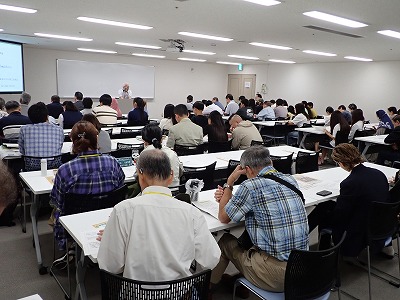
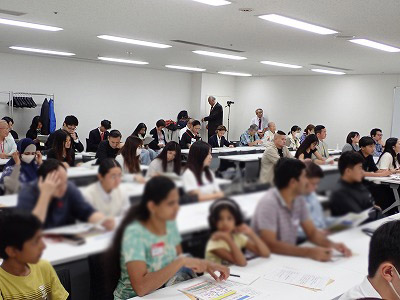
都立学校入試概要、まずは在京特別入試があります
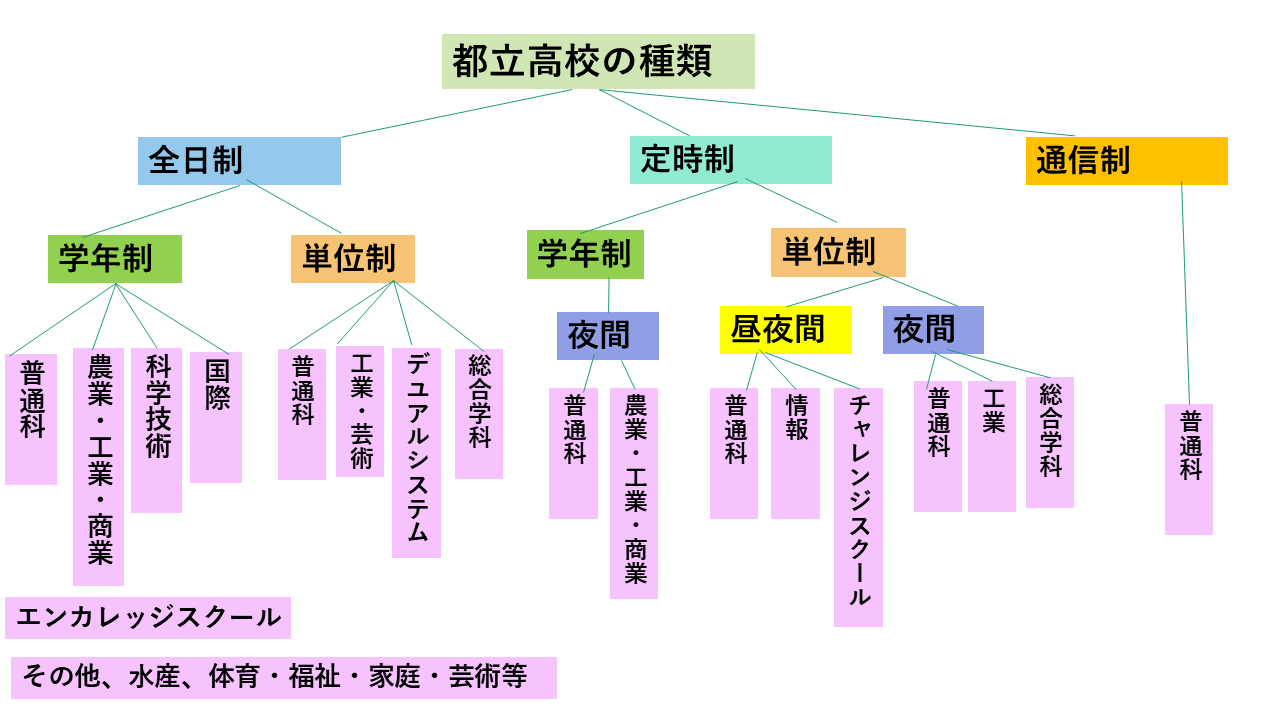
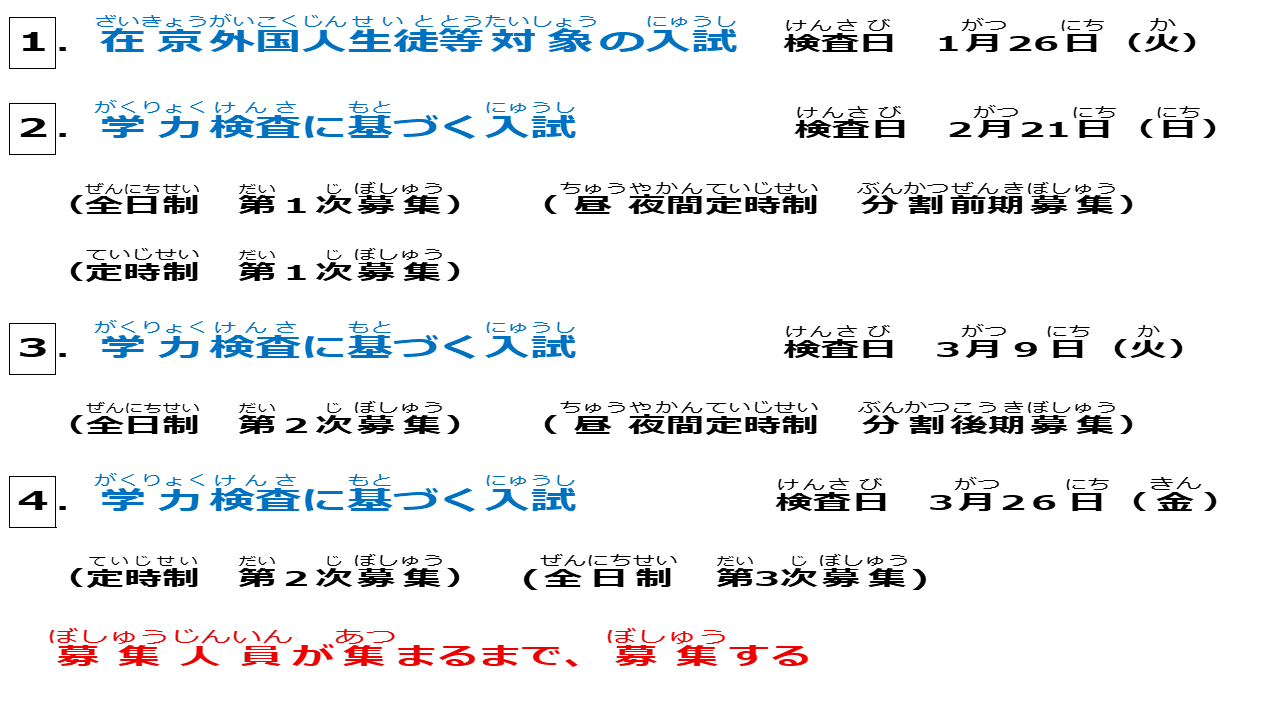
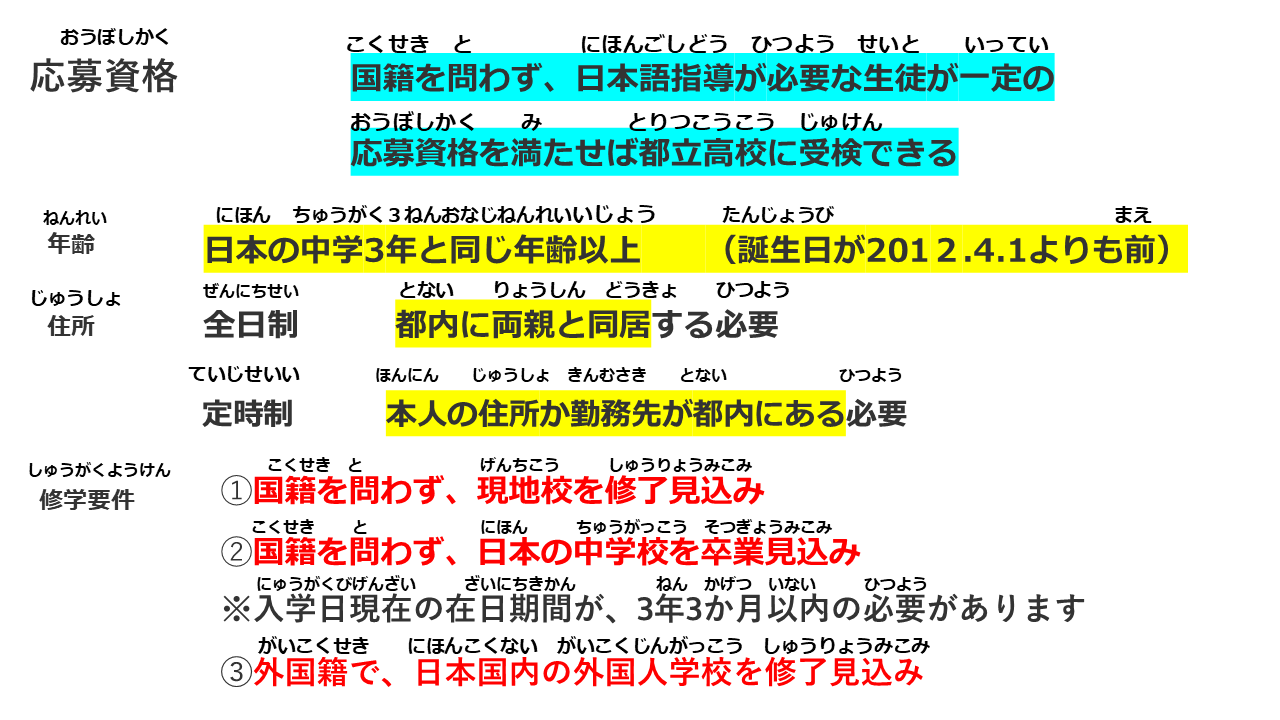
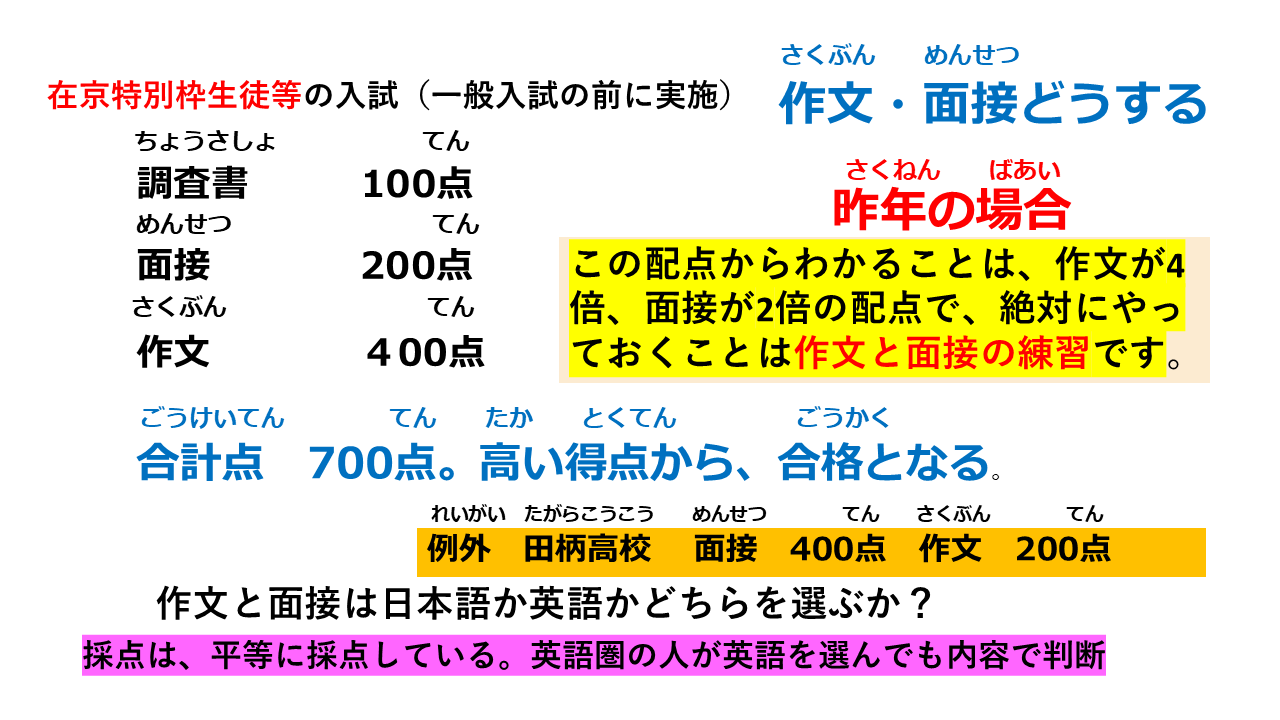
最初に、187の都立高校の種類と入試ルールについて詳しく説明しました。在京生徒は、来年1月から3月まで4回受検できます。在京外国人生徒対象の受検が2027年1月26日に実施され、資格要件として日本語指導が必要で年齢は中学3年生以上、都内に両親と同居する必要があることが必要です。試験は作文と面接で、日本語または英語を選択できるが、願書は実際の受験校に持参する必要があります。作文の準備について、5つの主要テーマ(志望動機、過去の取り組み、将来の目標、長所・興味、多文化共生)に焦点を当て、具体的な例と経験を含めることが重要です。
First, we provided a detailed explanation of the 187 types of Tokyo Metropolitan high schools and their admission rules. Students residing in Tokyo can take the entrance exams four times between January and March of next year. The exam for foreign students residing in Tokyo will be held on January 26, 2027. Eligibility requirements include having received Japanese language instruction, being in the third year of junior high school or higher, and living with both parents in Tokyo. The exam consists of an essay and an interview; candidates may choose to take the test in either Japanese or English, but they must submit their application forms in person to the school they wish to attend. When preparing for the essay, it is important to focus on five main themes (reasons for applying, past activities, future goals, strengths and interests, and multicultural coexistence) and to include specific examples and personal experiences.
Translated with DeepL.com (free version)
東京都在京外国人入試と次の一般入試日程
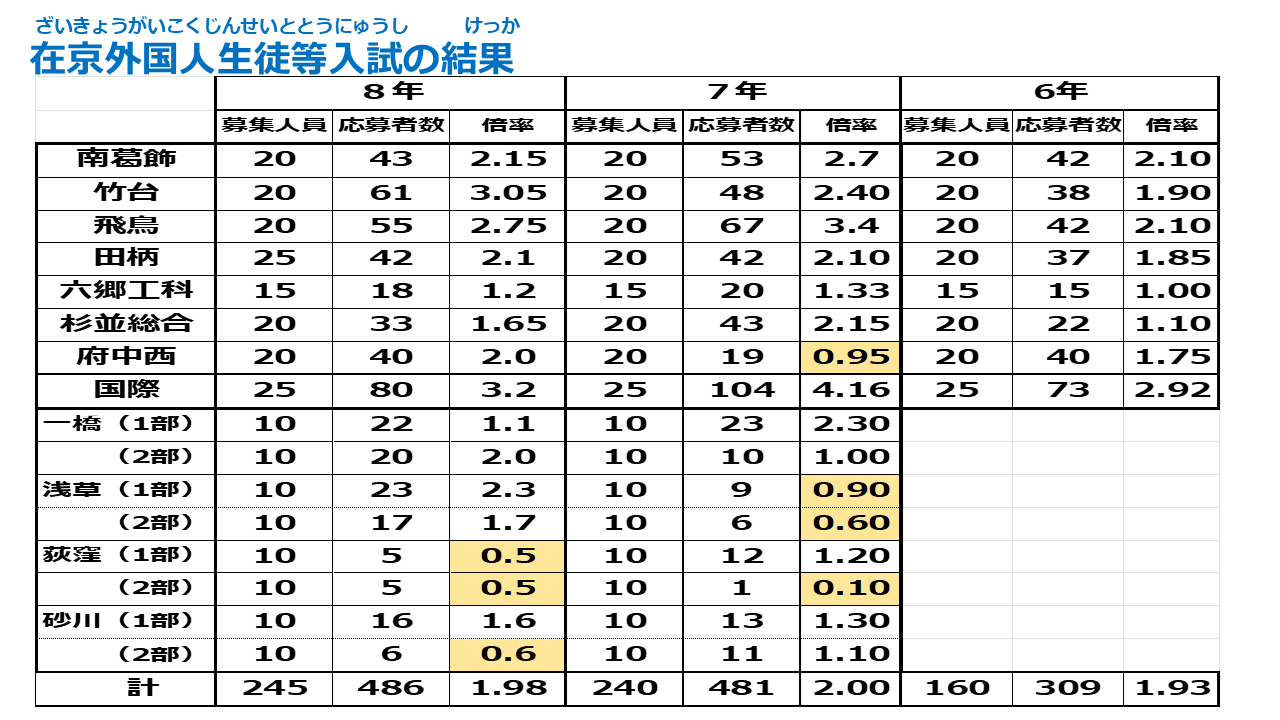
在京外国人入試については、10月に都庁で合同説明会が開催され、11月と12月に事前資格確認が実施される予定です。
在京外国人向けの特別入試については、日本に3年3ヶ月以内に上陸した生徒が対象で、競争率が非常に高く、前回の特別入試では240名中約230名が不合格となっていました。
面接と作文のウェイトが高いのです。在京入試を受ける方は今から練習を始めてください、英語で受験するか日本語で受験するかはどちらを選んでも平等に評価してくれます。必要なことは、自分が日本でやってきたことをしっかりと表現できるかどうかです。
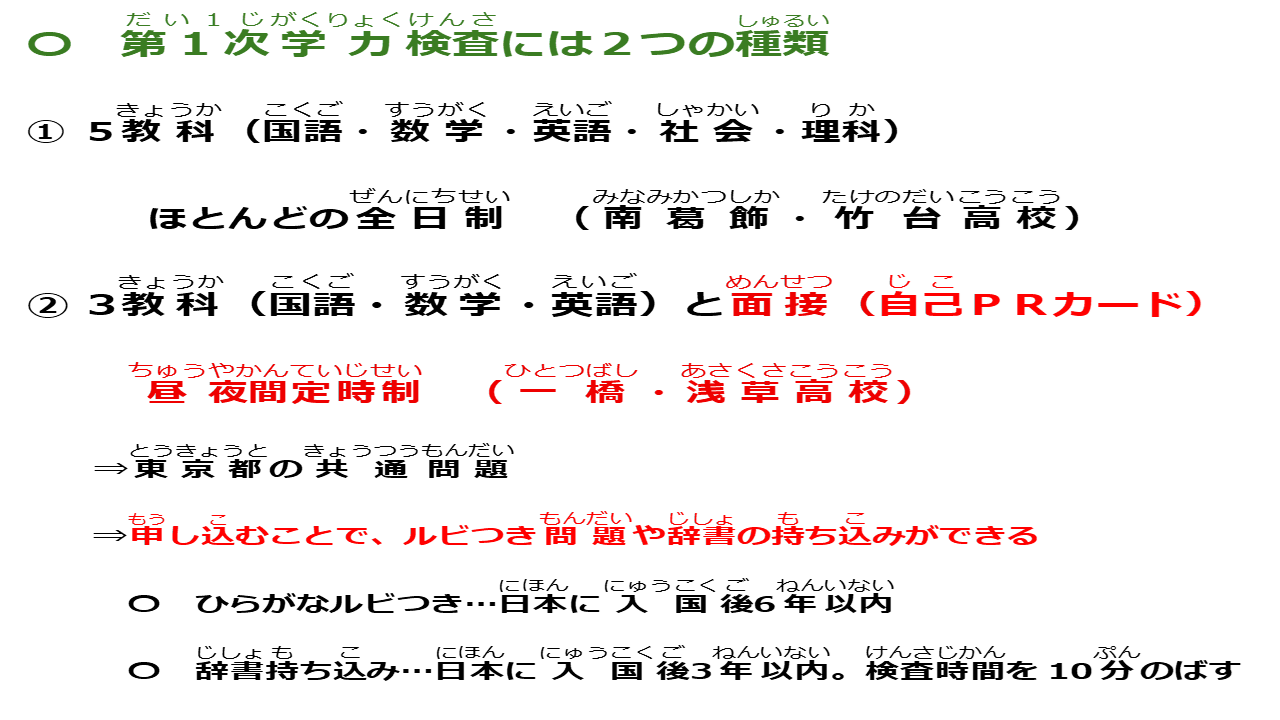
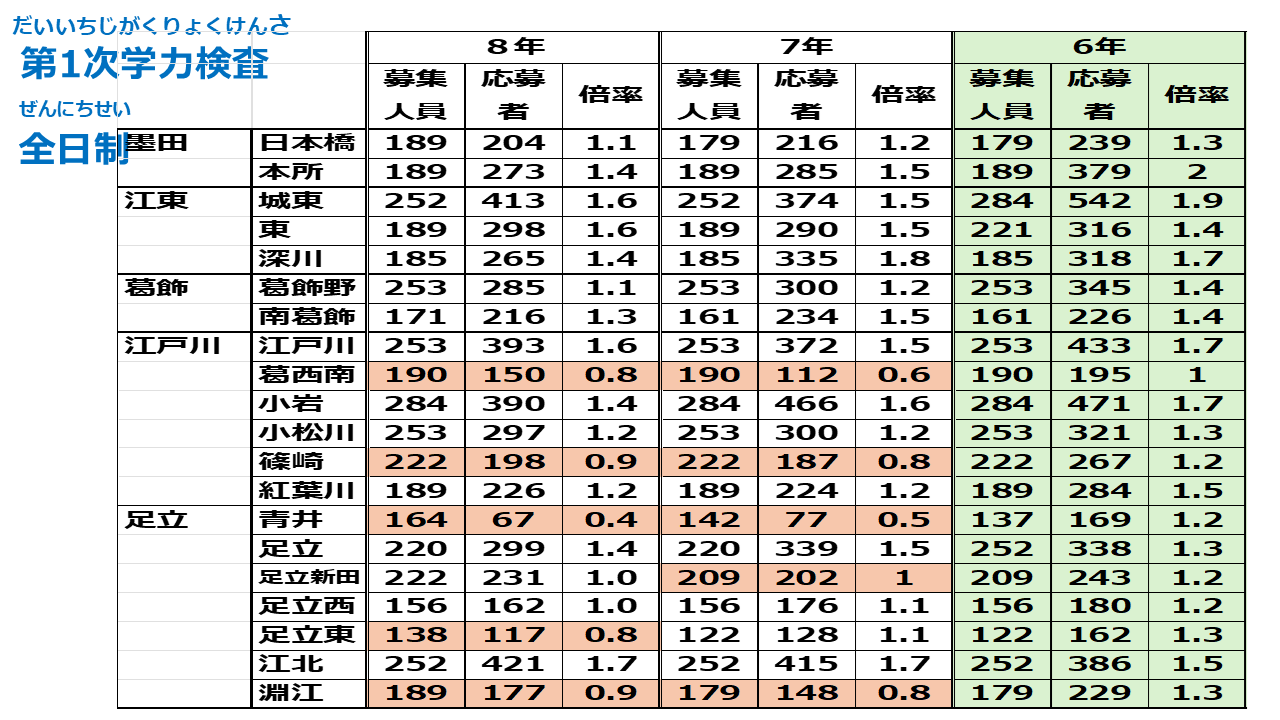
一般入試では、2月21日に1次の学力検査が実施されます、1月29日から出願が開始される予定で、五教科試験と三教科試験(国語、数学、英語)に加えて自己PRカードが必要。面接が実施される学校もあります。
Regarding the entrance exams for foreign residents in Tokyo, a joint information session is scheduled to be held at the Tokyo Metropolitan Government Building in October, and preliminary eligibility checks are scheduled to take place in November and December.
The special entrance exam for foreign residents in Tokyo is open to students who have arrived in Japan within the past 3 years and 3 months. The competition is extremely fierce; in the previous special entrance exam, approximately 230 out of 240 applicants were rejected.
The interview and essay carry significant weight. If you plan to take the Tokyo entrance exam, please start practicing now. Whether you choose to take the exam in English or Japanese, you will be evaluated fairly regardless of your choice. What matters is whether you can clearly express what you have accomplished in Japan.
For the general entrance exam, the first-stage academic aptitude test will be held on February 21. Applications are scheduled to open on January 29, and in addition to exams in five subjects or three subjects (Japanese, Math, and English), a self-introduction card is required. Some schools also conduct interviews.
一次一般入試に失敗しても、二次募集や定時制二次募集受検ができます
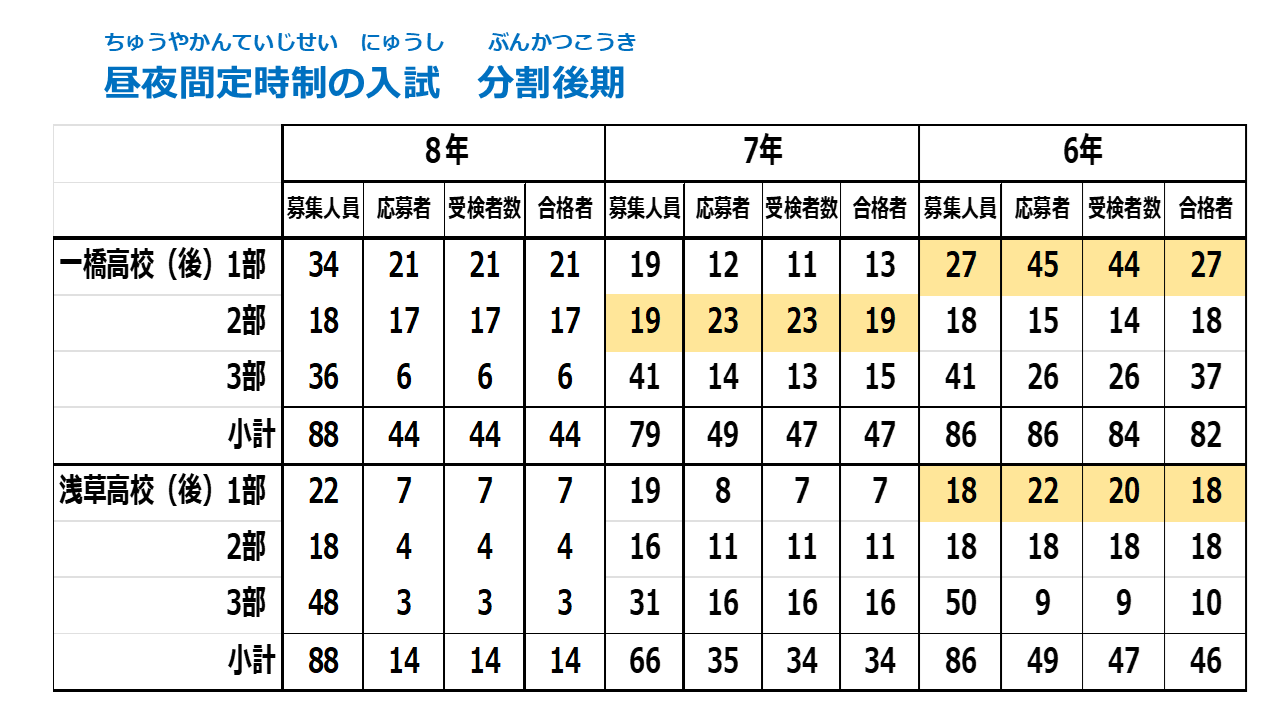
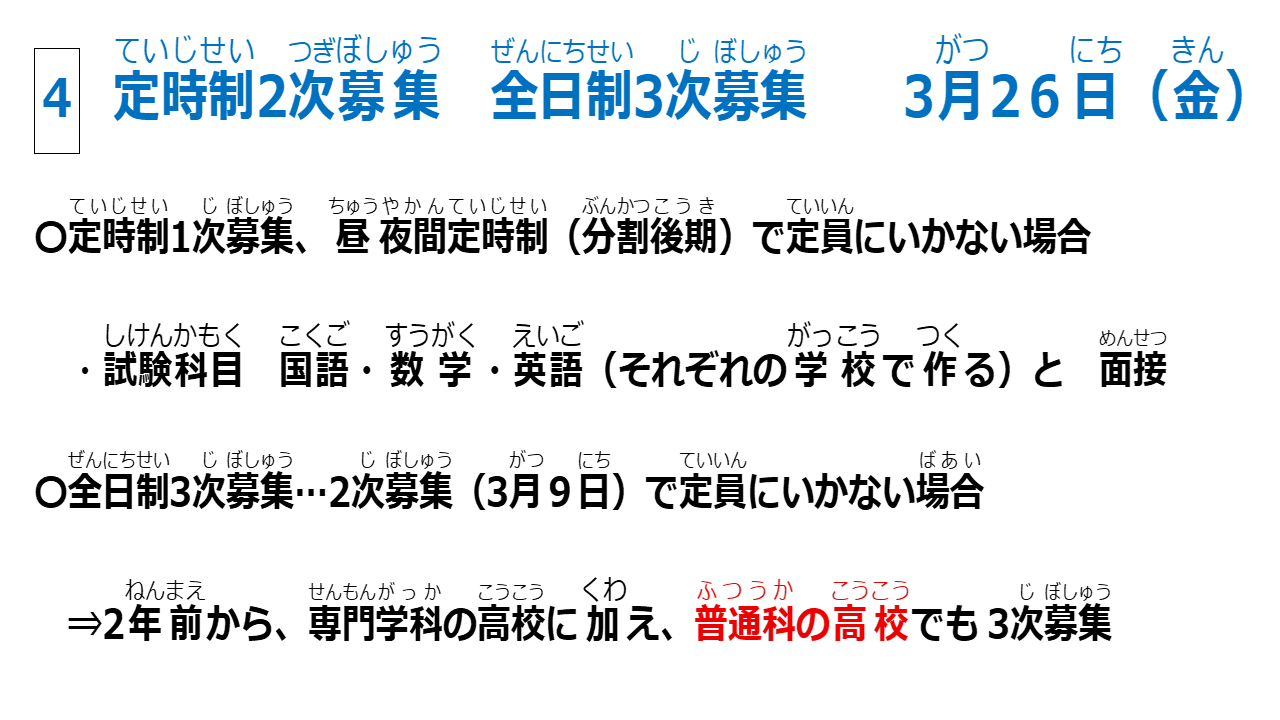
1月26日の(国際高校以外、国際高校は2月15日)在京受検で不合格となり、2月21日の一次の一般入試でも不合格になったとしても。3月9日に二次募集があります。そこで不合格になっても、3月26日に定時制第二次募集があります。
entrance exam on February 21, there is a second round of admissions on March 9. If you fail that as well, there is a second round of admissions for the part-time program on March 26.
都立高校には多様なタイプの高校があります
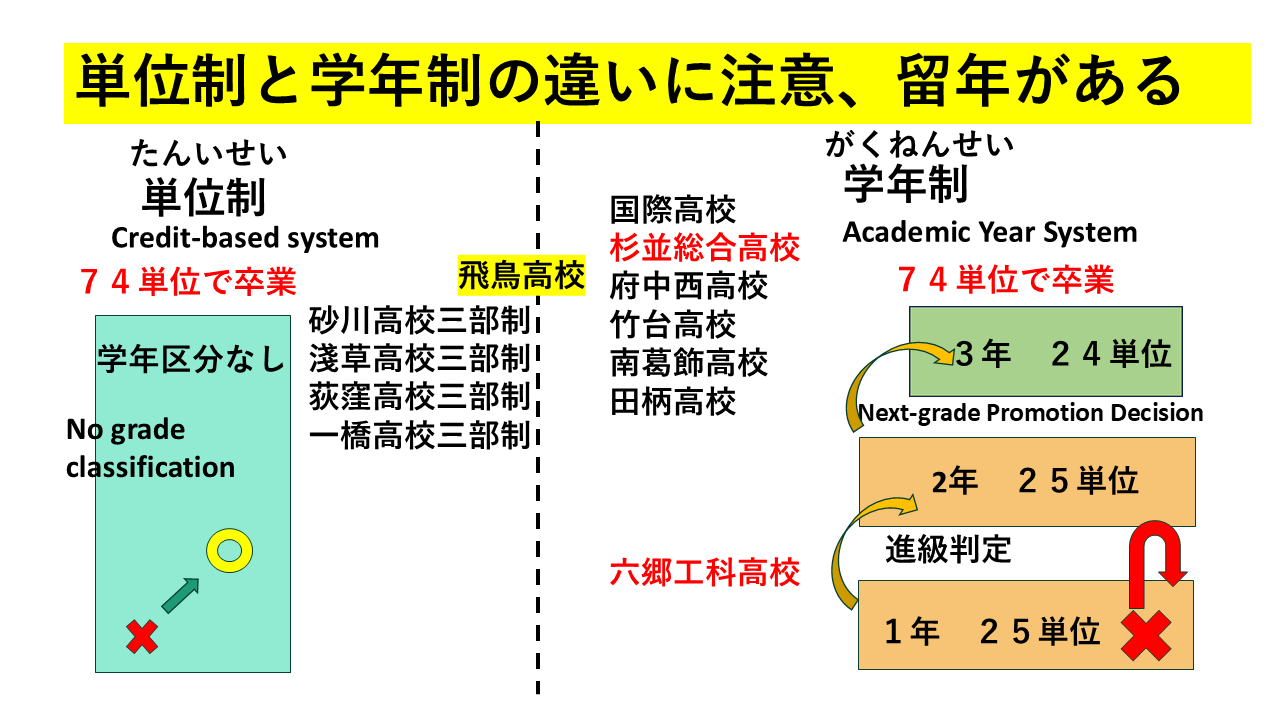
 都立高校の教育システムについて、学年制と単位制の違いを理解してください。学年制では年間25単位が必要で、足りないと留年になります、
単位制では学年区分なしで74単位取れると卒業できる柔軟性があります。在京対象の12校の日本語サポートが充実している学校を推奨し、専門技術を学ぶ工科高校と広い知識を学ぶ総合科の選択肢についても説明しました。
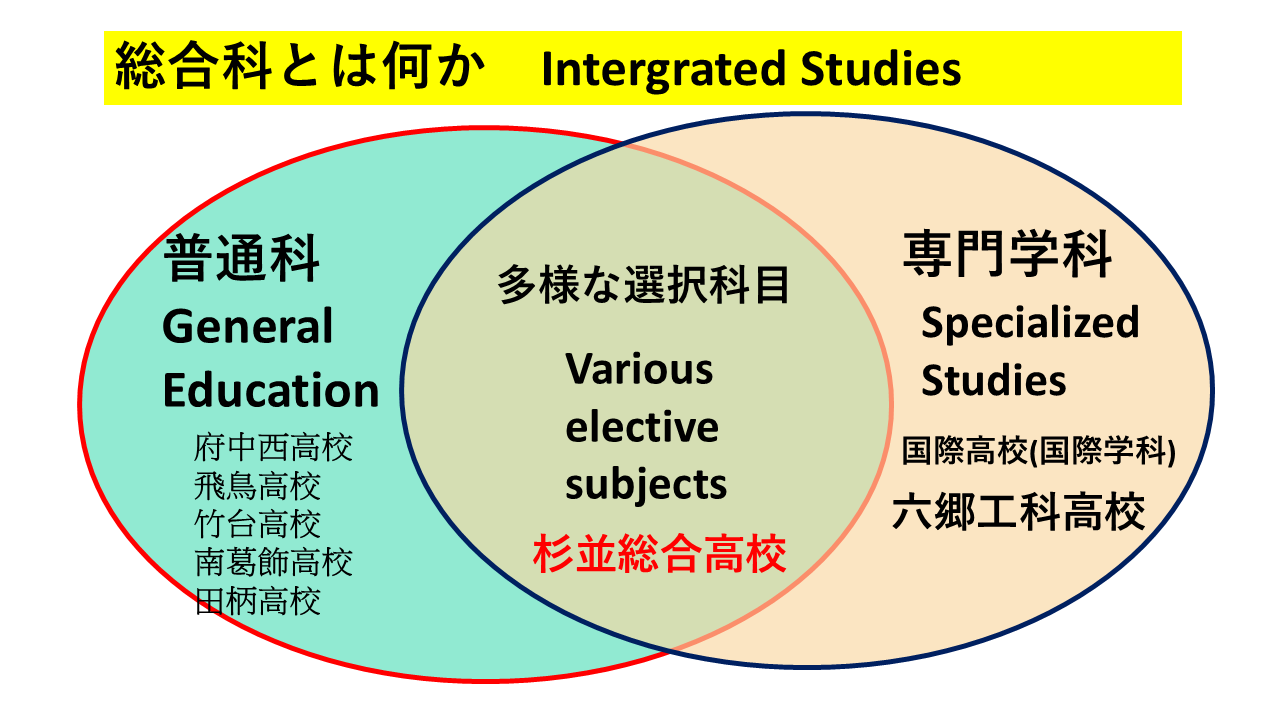
総合科は普通科と専門学科の範囲が交わる学校で、多様な選択科目を選べる高校です。まるで、大学のように幅広い選択を選ぶことができます。
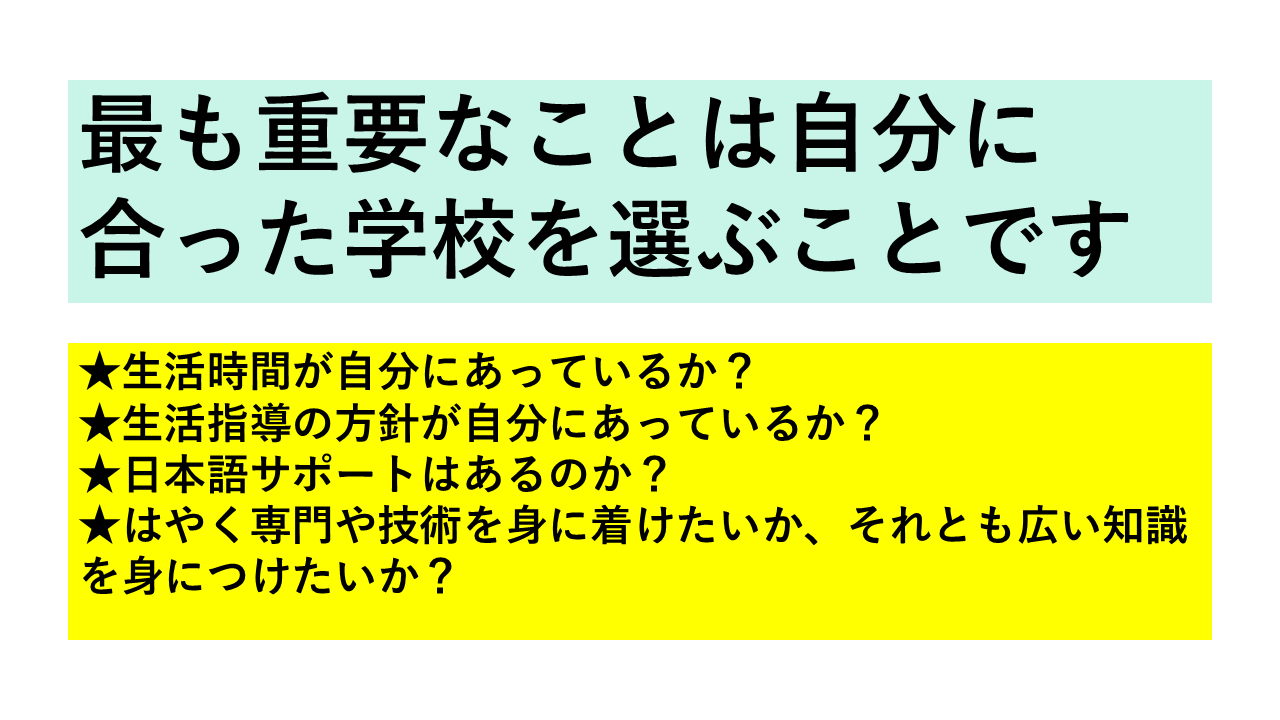
3年間通う高校ですから、自分の生活にあった学校を選んでください。
Please understand the difference between the grade-based and credit-based educational systems at Tokyo Metropolitan high schools. Under the grade-based system, students must earn 25 credits per year; if they fall short, they will have to repeat the grade.
The credit-based system offers flexibility: students can graduate once they have earned 74 credits, regardless of their grade level. We recommended 12 schools in Tokyo that offer comprehensive Japanese language support and explained the options available, including technical high schools where students learn specialized skills and general studies high schools where students acquire a broad range of knowledge.
Comprehensive high schools are institutions where the curricula of general and specialized tracks overlap, offering a wide variety of elective courses. Just like in college, students can choose from a broad range of options.
Since you’ll be attending high school for three years, please choose a school that fits your lifestyle.
三部制のしくみと日本語サポートが充実している12校
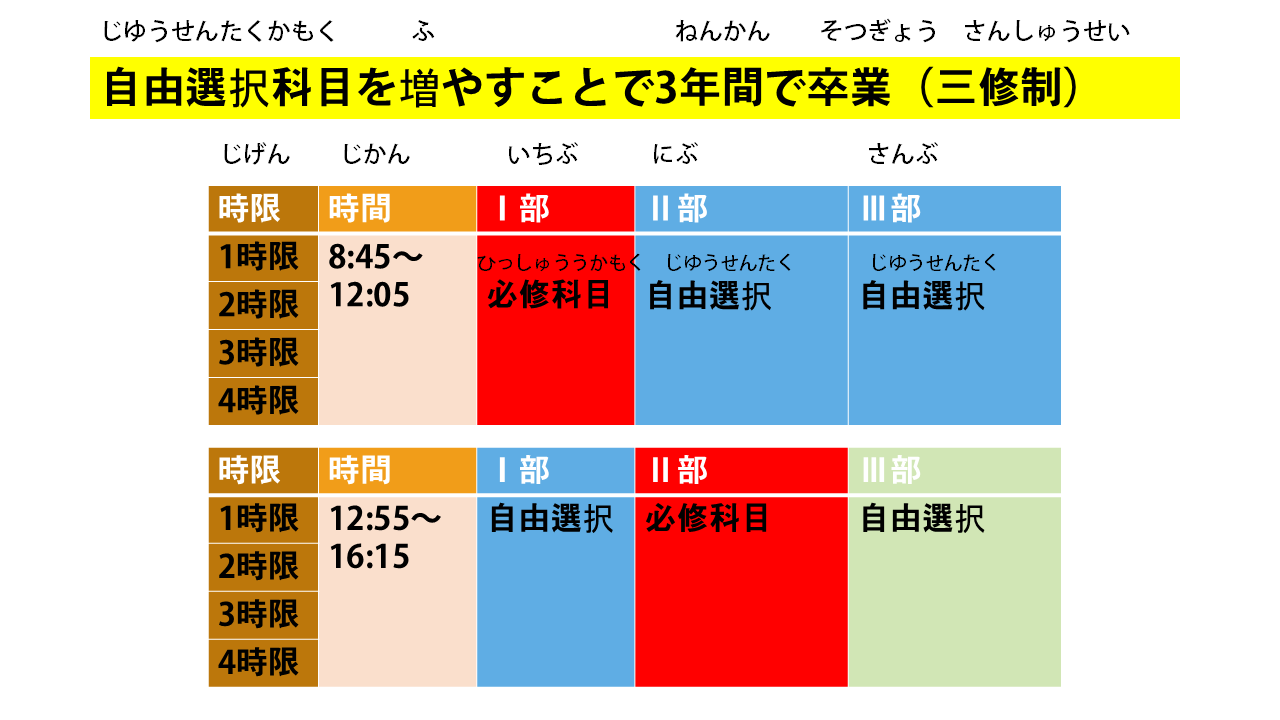
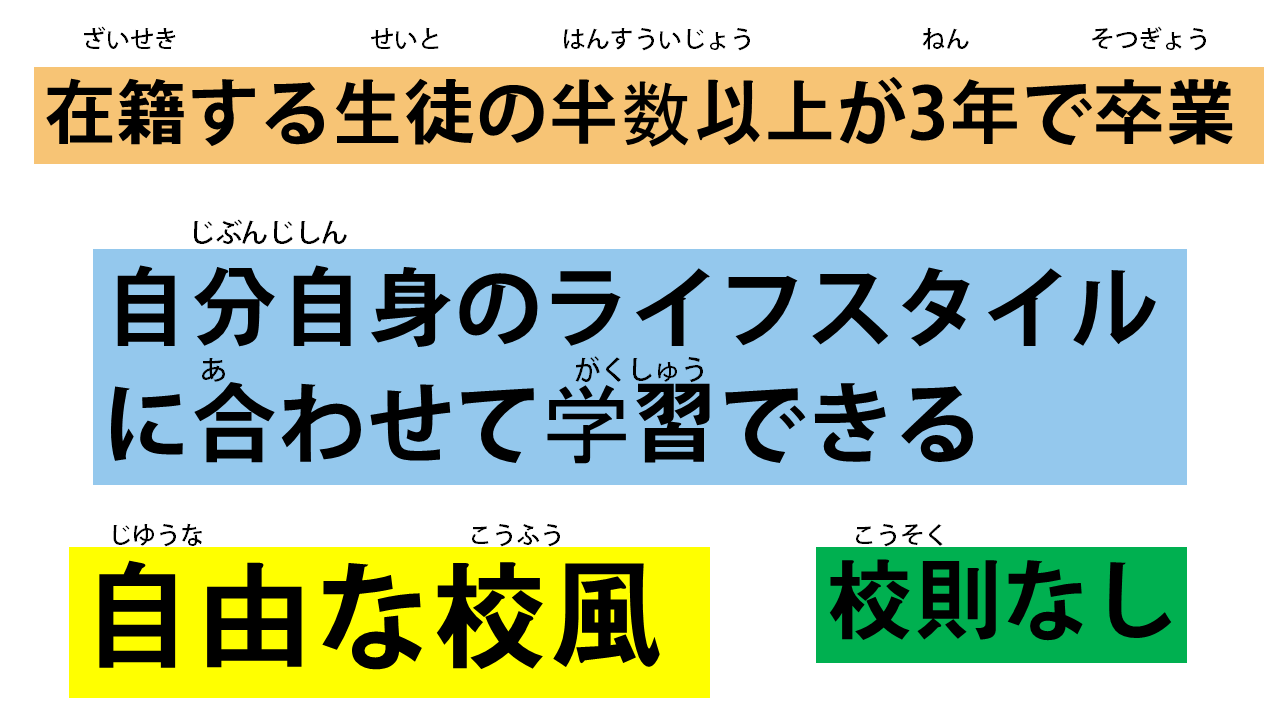
さらに、都立高校の教育システムと特徴について詳しく説明されました。特に3部制定時制については、午前部、昼間部、夜間部の3つの部があり、他部の単位をとることで、必要な単位を早く取得できるよう設計されています。つまり、通常、定時制は4年で卒業なのですが、他部の単位をとることで、3年で卒業できます。
日本語サポートも充実しており、将来の自分自身の在留資格の取得のために日本語の習得が重要であることも強調されました。
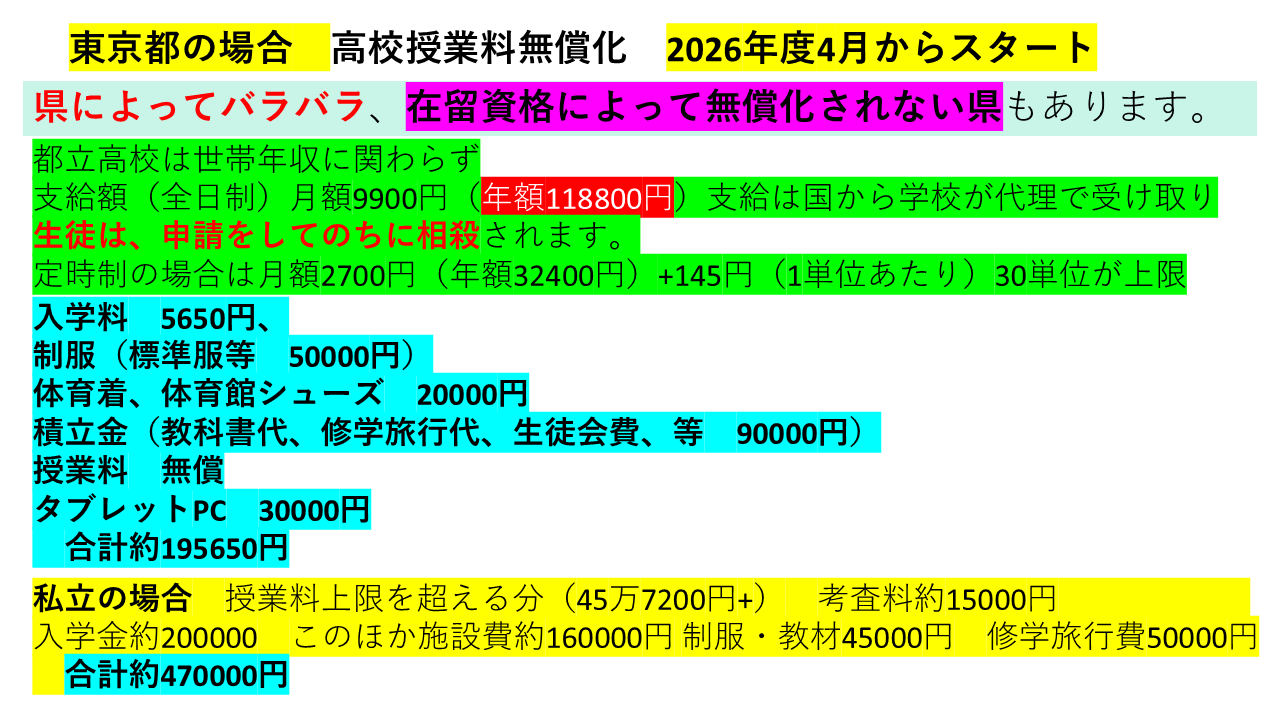
学費にかんしては、無償となる授業料に対して、制服や教科書代やタブレットPC代など無償にならない経費があります。しかし、都立の場合は私立高校の場合に比べて低い出費ですみます。
Furthermore, a detailed explanation was provided regarding the educational system and characteristics of Tokyo Metropolitan high schools. Specifically, regarding the three-division system—which consists of morning, daytime, and evening divisions—the program is designed so that students can earn the necessary credits more quickly by taking courses in other divisions. In other words, while students in the part-time division typically graduate in four years, they can graduate in three years by taking courses in other divisions.
Comprehensive Japanese language support is also available, and it was emphasized that mastering Japanese is crucial for obtaining one’s future residence status.
Regarding tuition, while tuition itself is free, there are expenses such as uniforms, textbooks, and tablet PCs that are not covered. However, the overall cost at metropolitan high schools is lower than at private high schools.
在留許可について
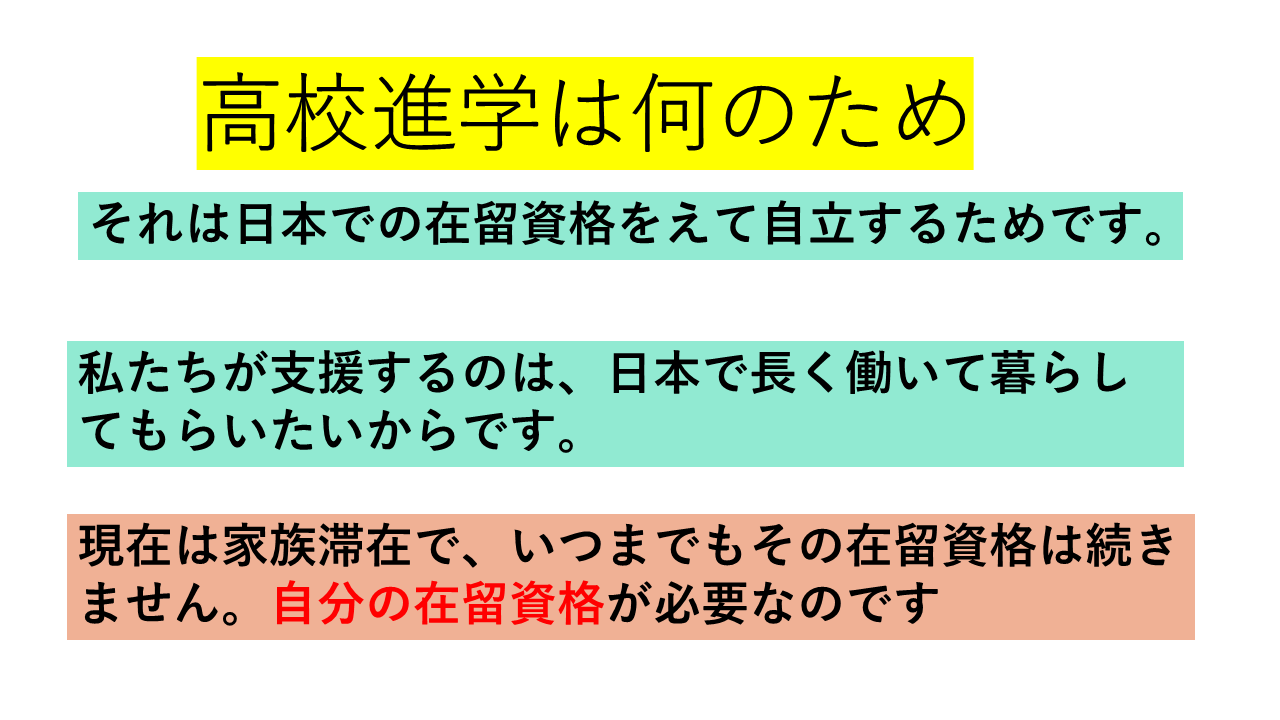
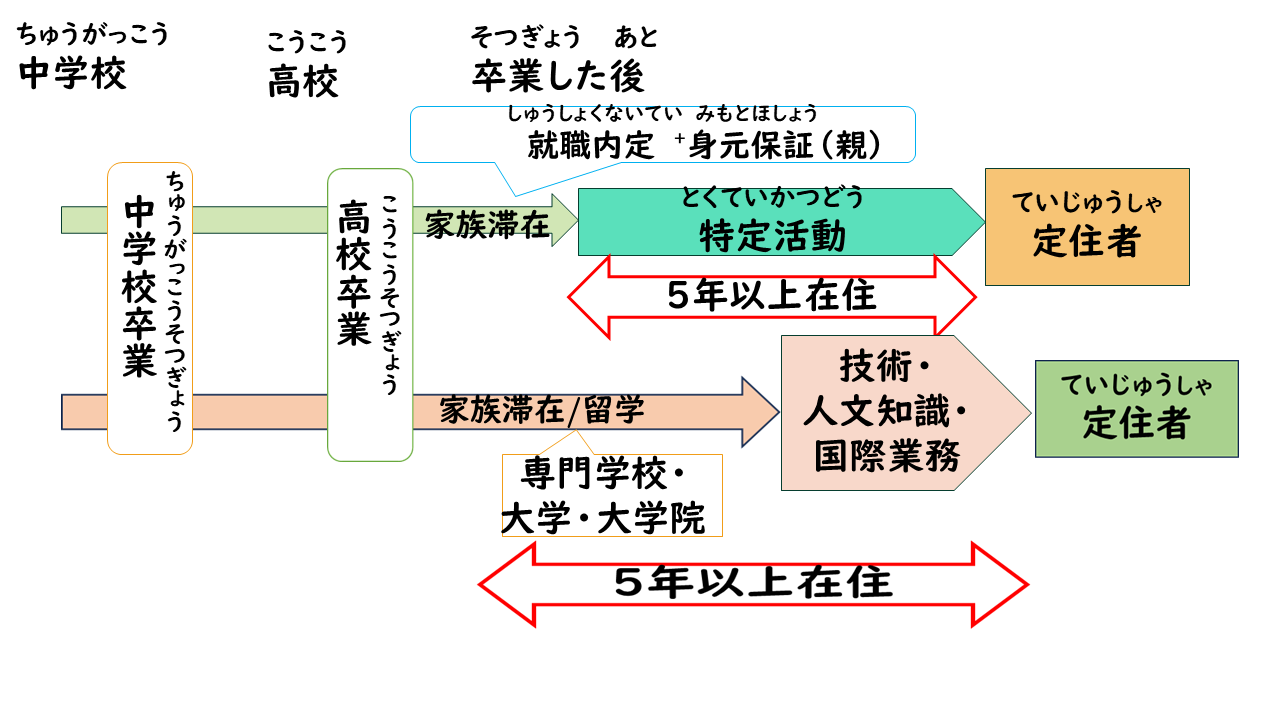
ほとんどの子どもたちは、現在「家族滞在」という在留許可ですが、この許可条件がいつまでも続きません。高校を卒業することは、自分自身の在留許可を得るための基本になると考えてください。将来、日本で長く暮らすためには、しっかりと高校を卒業する必要があります。
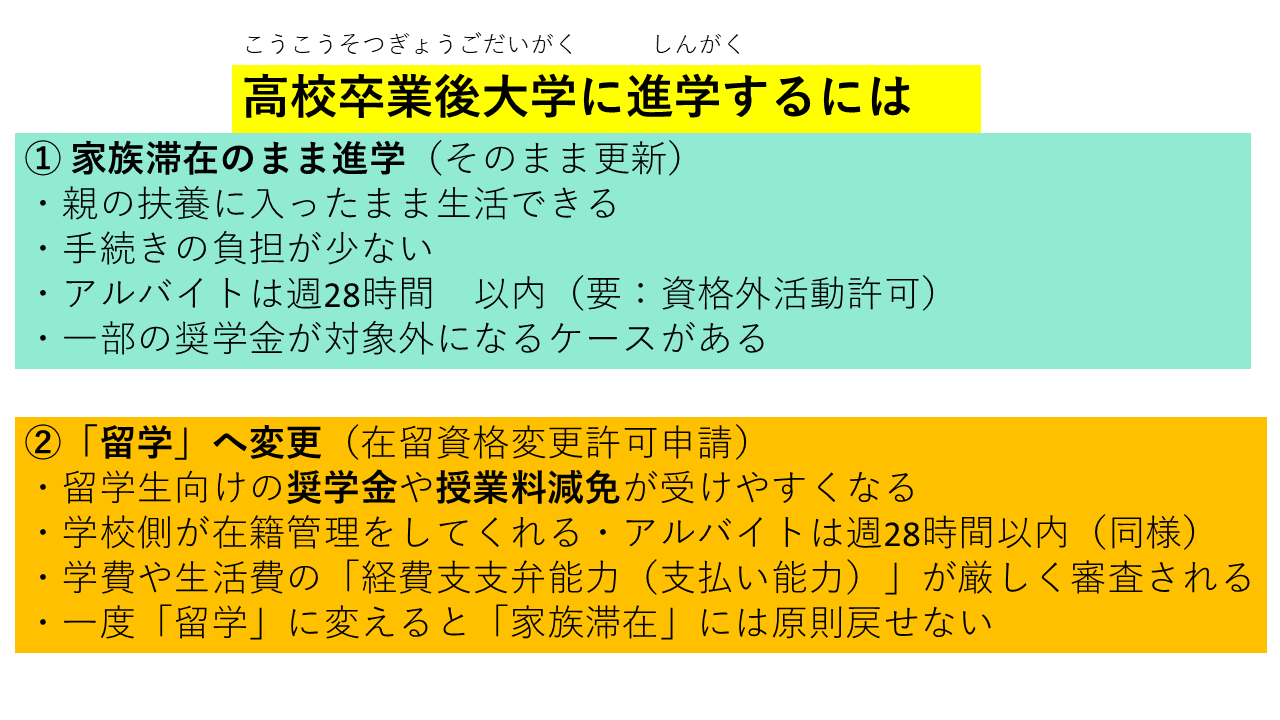
参加者では、大学進学が一番多かったですが、特定活動で、就職することも考えられます。いずれにしても、日本語のレベルが必要になってきます。ぜひとも、日本語サポートの手厚い高校に入り、日本語をしっかり学んでほしいと思います。
Regarding Residence Permits
Most of the children currently hold a “Family Stay” residence permit, but the conditions of this permit will not last forever. Please understand that graduating from high school is the foundation for obtaining your own residence permit. To live in Japan long-term in the future, it is essential that you successfully graduate from high school.
Among the participants, going on to college was the most common path, but finding employment under the “Specified Activities” status is also a possibility. In either case, a certain level of Japanese proficiency will be required. I strongly encourage you to enroll in a high school that offers extensive Japanese language support and to study the language thoroughly.
会場からの質問
Q:中国語で質問
通訳Q:資料の 2ページめに書いてあると思いますが、在京外国人生徒など、対象の入試と、学力検査に基づく入子この 2つ入試の違いを知りたいです。
A:在京入試は、在京の外国人等のための特別入試なんですけれども、これは日本に上陸して 3年3ヶ月以内のお子さんは、これが受けられます。
ですから、それ以外の方は、もっと長い期間日本にいる、そういう方は、もうすでに日本語が上手になっているということで、この在京入試は受けられません。
Q:次の質問なんですけど、例えば学力検査に、一次試験にあの一つの高校に試願して、そのテストを受け受ける場合ね、もし落ちた場合ね、どうやってそのその自分が落ちた、とか、そういう情報わかるんですかっていう質問です。
A:合格発表をウェブ、都教委のウェブで見ることができます。
Q:落ちた場合は、あの 2回目の入試を受けたいですか、その情報はどのようにわかりますか。
A:東京都教育委員会のページに日程が出ています、次の学力検査の日程が出ています。
不合格となったら、次の学校に願書を出せば受検できます。
Q例えば 1次試験 1次試験ね。あの杉並総合志願したとしてなんですけれども、落ちて 、2次試験の時に同じ学校じゃなきゃいけないんですか。
A:どこでも受けられます。
Q:すみません、ちょっと質問があります。
一つは、学生の年齢制限がありますか?。うちの子は今年去年の 2月日本に来ました。中国で中学校 3年年生在学をしましたが、日本で日本語は全然わからないから、中学校 の2年生に入りました。だから、年齢が今年 16歳以上になります。これは大丈夫ですか ?
A:15歳以上だから。大丈夫です。
Q:はい、もう一つの質問です。住所要件について、全日制の学校を受験する場合、都内に両親の同居する必要があります。今、うちの子のお父さんが中国にいます。母だけ、東京都に住んでいますが、これは大丈夫ですか。
A:それはね、聞きに行かないとダメなのです。
先ほど言った資格審査この日に必ず行くか、受ける学校に行って聞いて、OKかどうかそれを出してもらいます。だから必ず資格審査が必要です。
Q:はい、わかりました。ありがとうございます。
第2回のガイダンスに予約ができます。予約はこちらのリンクのページです
高校生インタビュー
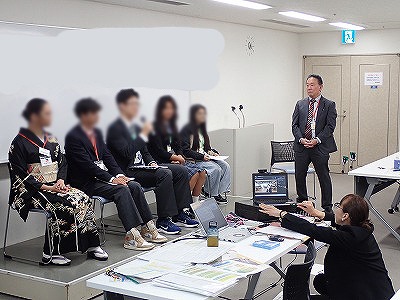
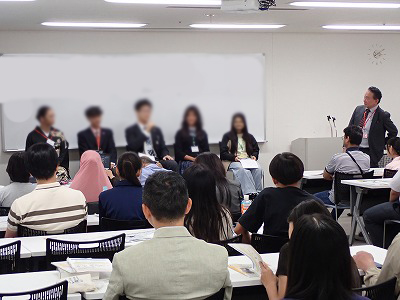
フィリピン、ネパール、中国、ネパール,バングラデシュ、5名の在京外国人高校生に入試のことや学校生活のことを聞いてみました
We asked five foreign high school students living in Tokyo—from the Philippines, Nepal, China, Nepal, and Bangladesh—about their entrance exams and school life.
Qそれでは、最初に自己紹介をしてもらいます。
A:皆さんこんにちは。生まれた国はフィリピンです。
日本に来て 3年 8ヶ月ぐらいです、一橋高校です。
学校ではいけ花の華道部と茶道部の部長をやっています。よろしくお願いします。
B:皆さんこんにちは。
生まれた国はネパールで日本に来て約 5年たちました。今は杉並総合高校の 3年生で、
1年生で生徒副会長、2年生で生徒会長を務めてきました。よろしくお願いします。
C:こんにちは。生まれた国は中国です。
2024年 9月に日本に来ました、ちょうど 2年です。
学校は都立田柄高校 2年生、学校では生徒会長をやっています。
また 放送委員長もやっています。どうぞよろしくお願いします。
Dさん:皆さんこんにちは。生まれた国はネパールです。
日本は、中学校 1年生の時に来ました 4年になります。田柄高校 2年生です。
私は生徒会で副会長をやっています。どうぞよろしくお願いします。
E:こんにちは。私の生まれた国はバングラデシュです。
去年の2月18日に日本に来ました。1年半ぐらいになります。
浅草高校 1年生です。よろしくお願いします。
Q:高校受験について。どんなふうに調べて、どんな種類の受験をしたのか。教えてください。
A私は中学校 2年生の頃から高校のことを調べて、 3年生になって、担任の先生と校長先生の力を借りて、準備を始めました。第三希望まで出しました。一番行きやすく、生活に合っていることが一番大事かなと思いました。私は夜は起きていて朝寝ることが多く、自分の生活にあった午後がいいと思いました。一橋高校と浅草高校がありましたが、結局一橋高校に受験しました。在京外国人入試で合格しました。
国語の先生に、入ってからが大変だよ、早めに合格したのはいいが、余裕持つのではなくて、一般入試で入ってくる人たちと同じように学習する必要があると言われました。そして合格した後もしっかり学習することになりました。今よく考えれば、国語の先生の言葉をもっとよく聞いておけばよかったと思います。
Q: First, please introduce yourselves.
A: Hello, everyone. I was born in the Philippines.
I’ve been in Japan for about 3 years and 8 months, and I attend Hitotsubashi High School.
At school, I’m the president of both the Ikebana Club and the Tea Ceremony Club. Nice to meet you all.
B: Hello, everyone.
I was born in Nepal, and it’s been about 5 years since I came to Japan. I’m currently a third-year student at Suginami Comprehensive High School,
and I served as vice president of the student council in my first year and president in my second year. Nice to meet you all.
C: Hello. I was born in China.
I came to Japan in September 2024, so it’s been exactly two years.
I’m a second-year student at Tokyo Metropolitan Tagara High School, where I serve as student council president.
I’m also the chair of the broadcasting committee. Nice to meet you all.
D: Hello, everyone. I was born in Nepal.
I came to Japan when I was in the first year of junior high school—it’s been four years now. I’m a second-year student at Tagara High School.
I serve as vice president of the student council. I look forward to working with you all.
E: Hello. I was born in Bangladesh.
I came to Japan on February 18 of last year. It’s been about a year and a half.
I’m a first-year student at Asakusa High School. I look forward to working with you all.
Q: About high school entrance exams. How did you research them, and what kind of exams did you take? Please tell us.
A: I started researching high schools around my second year of junior high, and when I entered my third year, I began preparing with the help of my homeroom teacher and the principal. I submitted applications for my top three choices. I thought the most important thing was finding a school that was easy to get to and suited my lifestyle. I tend to stay up late and sleep in, so I thought an afternoon schedule would suit my lifestyle better. I had the option of Hitotsubashi High School and Asakusa High School, but in the end, I took the entrance exam for Hitotsubashi High School. I was accepted through the entrance exam for foreign students living in Tokyo.
My Japanese language teacher told me, “It gets tough once you’re in. It’s great that you got accepted early, but don’t get complacent—you need to study just as hard as the students who enter through the general entrance exam.” So, even after I was accepted, I made sure to keep up with my studies. Looking back now, I wish I had listened more carefully to what my Japanese teacher said.
Q:合格した時のエピソードを聞かせてください。
A:合格した時に中学の先先生に連絡したのです。朝 8時頃に発表がありました。
私と友達二人で、先生を驚かそうと思って、「あのごめんなさい。ちょっと落ちました」と言い、その後に「合格しました」と言ったら、先生にものすごく言われて、お母さんにも「何をしてるの」って言われてしまいました。すごく楽しかったです。
B:私は中学 2年生のとき来日して、中学入って、すぐ近くの日本語を教えてくれる団体に出会い、そこで日本語をずっと教えてもらいました。そこの先生がいろいろ教えてくれて、高校入試のこととかも教えてくれて、杉並総合高校を勧めしてくれました。まだ日本で3年もたってなかったので、在京外国人入試で杉並総合高校に合格し、入学しました。
Q:すごく日本語が上手いですね。どんな施設でどうやって日本語を勉強したのかを教えてもらえますか
はい、私は家の近くに、 NPO子ども自立支援センターっていう日本語学校があって、 4年間、今までも継続的に日本語を学んでいます。
C:高校受験について調べ始めたのは、12月ぐらいです。9月に来日し日本語を勉強して、 12月になって、とりあえず国際高校を 在京入試での受けてみたら、準備不足で不合格でした。
そして、田柄高校の一般入試を受けて合格しました。
最初に受けた国際の在京入試から田柄高校受験まで、時間がなかったかなと思います。
Q:国際の在京を受けて不合格、そこからどうやって次の学校を選んだのですか ?
C:その時は、区のボランティアセンターで日本語を勉強していましたので、そこの日本語の先生から田柄高校を受けてみないか、と言われて、田柄高校を受験しました。
Q:田柄高校の1次募集一般学力検査を受けたということですか?
C:いいえ 二次募集で受けました。
D:私は長野県の中学校に通っていたため東京の高校は 全く分からなかったです。突然親の都合で東京を引っ越すことになりました。長野県の中学校には日本語教室があり、日本語教室の先生に「私は東京に引っ越すのですが、どうすればいいんですか」って聞いたら、長野県の先生だから東京は分からないって言われました。先生は協力的で東京のことも調べてくれて、それで私は一回で合格しなかったら、長野県から東京引っ越すことができなくて、だから1回の入試で入れる高校探しました。それで田柄高校を見つけて、ネパール人の子たちが多いよ。あなたに合うと思います」と先生に言われて、私も通ってみたいなと思い、田柄高校を選びました。
私は在京を受けたのですが、面接と作文両方英語で受けました。それで合格して、田柄高校に入りました。
E:去年日本に来ました、バンフラデシュの中学校を卒業して、そこに日本語クラブがあって日本語を勉強しました。2月18日に来日、高校の試験は何も知らず、南葛飾高校を受けましたが、不合格でした。その後 1年間、日本語を勉強して、今年 浅草高校に合格しました。
Q:浅草高校ではどんな受験だったのですか?学科試験を受けたのですか?
E:浅草高校の 一般受験です。学力検査を受けました。面接もありました。面接、国語、数学、英語です
Q:はじめに 南葛飾高校を受けた年にも まだ受けられる学校があったと思いますが
E:南葛飾高校の2次募集を受けたので 日本語の勉強をしてから受け直すことにしました
Q:今は 浅草高校の 1部に通っているのですよね。E:はい
Q: Please tell us a story about when you were accepted.
A: When I was accepted, I contacted my middle school teacher. The results were announced around 8:00 a.m.
Two friends and I decided to surprise the teacher, so we said, “Sorry about that. I didn’t make it,” and then added, “Actually, I got in!” The teacher gave us a real scolding, and my mom even asked me, “What are you doing?” It was a lot of fun.
B: I came to Japan when I was in my second year of junior high school. Right after starting junior high, I found a nearby organization that taught Japanese, and I studied there consistently. The teacher there taught me a lot of things, including about high school entrance exams, and recommended Suginami Sogo High School to me. Since I hadn’t been in Japan for even three years yet, I passed the entrance exam for foreign students living in Tokyo and was admitted to Suginami Sogo High School.
Q: Your Japanese is really good. Could you tell us what kind of institution you attended and how you studied Japanese?
Yes, there’s a Japanese language school near my house called the NPO Children’s Independence Support Center, and I’ve been studying Japanese there continuously for four years now.
C: I started researching high school entrance exams around December. I arrived in Japan in September and studied Japanese, and when December came, I decided to try taking the entrance exam for an international high school through the “Residents in Tokyo” exam—but I wasn’t prepared enough and didn’t pass.
Then, I took the general entrance exam for Tagara High School and was accepted.
I think there just wasn’t enough time between the first exam I took—the International High School’s Tokyo-based entrance exam—and the Tagara High School exam.
Q: You took the International High School’s Tokyo-based exam and didn’t pass. How did you choose your next school after that?
C: At the time, I was studying Japanese at the ward’s volunteer center, and a Japanese teacher there suggested I try applying to Tagara High School, so I took the exam there.
Q: So you took the first-round general academic aptitude test for Tagara High School?
C: No, I took it during the second round of admissions.
D: Since I attended junior high school in Nagano Prefecture, I knew absolutely nothing about high schools in Tokyo. I suddenly had to move to Tokyo due to my parents’ circumstances. My junior high school in Nagano had a Japanese language class, and when I asked the teacher there, “I’m moving to Tokyo—what should I do?” they told me they didn’t know anything about Tokyo because they were from Nagano. The teacher was very helpful and looked into things in Tokyo for me. Since I wouldn’t be able to move from Nagano Prefecture to Tokyo if I didn’t pass on my first try, I looked for a high school I could get into on my first attempt. That’s how I found Tagara High School. The teacher told me, “There are a lot of students from Nepal there. I think it would be a good fit for you,” so I thought I’d like to attend, and I chose Tagara High School.
I took the Tokyo-based entrance exam, and both the interview and the essay were in English. I passed and enrolled at Tagara High School.
E: I came to Japan last year after graduating from a junior high school in Bangladesh, where I studied Japanese through the school’s Japanese club. I arrived in Japan on February 18. I knew nothing about high school entrance exams, so I applied to Minami-Katsushika High School but wasn’t accepted. After that, I spent a year studying Japanese, and this year I was accepted into Asakusa High School.
Q: What was the entrance exam like at Asakusa High School? Did you take a written exam?
E: It was the general entrance exam for Asakusa High School. I took an academic aptitude test. There was also an interview. The exam covered the interview, Japanese, math, and English.
Q: I think there were still other schools you could have applied to the year you first took the exam for Minami-Katsushika High School.
E: Since I applied for Minami-Katsushika High School’s second round of admissions, I decided to study Japanese and reapply.
Q: You’re currently attending the first division at Asakusa High School, right? E: Yes.
Qみなさん受験の準備をどれぐらいどんなふうにしましたか
A:校長先生からの指導がおおきかったです。校長先生に「練習してみない」って言われて、あの時私は生徒会長だったので、まずは作文の練習をしました。何度も練習して 「ほぼまできる」と言われて、面接の練習をしました。 生徒会長として夜間中学との交流もあり、毎週スピーチばかりやらされました。面接にはかなり力を入れて練習して、一橋の2部に在京入試で合格できました。
B:日本語学校と中学校で面接と作文の練習をしました。作文は特に日本語学校で日本語の先生にみてもらって、面接は中学校の校長先生と他人の先生と練習しました。
B:作文も面接もどっちも日本語で受けました
C:最初国際高校の在京で英語で作文と面接を受けましたが、結果発表から2週間後に一般試験でしたので、その間にあの自分で問題集を解きました。 1日に 13~15時間ぐらいは勉強していました。日本語を含めて。
T:C君はものすごく勉強家だと思います。日本人にもいないぐらい勉強していると思います。
D:私は在京入試を受けたので、私の受験は面接と作文だけでした。
私は英語でやりましたので、中学校で、外国人指導員の英語の先生に面接と作文の確認をしてもらって、また日本語教室の先生方にもみてもらいました。最初は日本語で作文書いて、それを翻訳して、英語で書いて、それを先生に見てもらう形でした。
T:はい、Dさんは本当に日本語がお上手ですね。びっくりしました。
E:日本語教室のS先生が本当に助けてくれました。日本語のクラブに行き、そこからずっと日本語を勉強し、入試の勉強もしました。入試過去 10年間の問題集の問題を解きました。 勉強していくうちに だんだんとできるようになりました。
Q:Eさんはうまくいかなかった時期があって、日本語を 1年間勉強してからまた受験して合格したのですね。挫折(あきらめそうになった)ことはなかったのですか、もうもう無理やめたいと思ったことはなかったのですか。
E:ありました。
Q:どうやって乗り越えたのですか?誰か支えてくれたのかな?
日本語の先生ですか ?親ですか友達ですか ?
E:親と姉と先生です。お姉さんが今日本の高校3年生だから、日本語でどうしても生活したかったです
Qそれでは高校生活について聞きたいと思います。
A:友達が多くて、勉強はものすごく自由な雰囲気なので、自分らしく行けると思っています
部活は 1年生の頃、バレーボール部に入り、それから茶道部と生け花を始めました。
今年は文化祭で日本舞用の発表会をやりました。
Q:本当に多才ですね。頑張っていますね。
B:学校では、バドミントン部に入っていて、写真部にも入っています。文化祭とか体育祭の写真を撮ったりしています。
今は 3年生なので、部活も生徒会も何もないです。で、杉並総合高校は課題研究っていうのがあって、 3年生は全員 1年間何かについて研究するっていう形ですので、今一生懸命課題研究に向けて、さらに 大学受験に向けて頑張っています。
Q:杉並総合高校は日本語の学習に関してはどんなことをしてくれていますか ?
B:杉並総合高校は入学してからまず、全員の学力試験があり、日本語力を確認し、それぞれに合わせた日本語の授業の取り出し、さらに課題研究の取り出し授業、放課後の日本語の勉強そして、2年生 3年生になると選択科目が増えますので、その選択科目で日本語を選んで勉強できます。たくさん日本語の勉強ができます。
Q:C君はN1を持っているそうですね。
C:はい
Q: How much and in what ways did you prepare for the entrance exams?
A: The guidance I received from the principal was very helpful. The principal told me, “Why don’t you try practicing?” Since I was the student council president at the time, I started by practicing my essay writing. After practicing many times and being told I was “almost there,” I moved on to practicing for the interview. As student council president, I also participated in exchange programs with night schools, so I was required to give speeches every week. I put a lot of effort into practicing for the interview and was accepted into Hitotsubashi University’s Part-Time Program through the Tokyo-based entrance exam.
B: I practiced interviews and essay writing at my Japanese language school and junior high school. For my essays, I had my Japanese teacher at the language school review them, and for interviews, I practiced with my junior high school principal and other teachers.
B: I took both the essay and the interview in Japanese.
C: At first, I took the essay and interview in English for the Tokyo-based entrance exam at the international high school, but since the general exam was two weeks after the results were announced, I worked through practice problem sets on my own during that time. I studied about 13 to 15 hours a day, including Japanese.
T: I think C is an incredibly dedicated student. I don’t think even many Japanese students study that much.
D: Since I took the Tokyo-based entrance exam, my application process consisted only of an interview and an essay.
Since I did it in English, I had a foreign English teacher at my middle school review my interview and essay, and I also had the teachers at my Japanese language class look them over. At first, I would write the essay in Japanese, translate it, write it in English, and then have the teacher review that version.
T: Yes, D, your Japanese is really excellent. I was surprised.
E: Mr. S from the Japanese language class really helped me. I joined the Japanese club, and from there I studied Japanese consistently and prepared for the entrance exam. I worked through practice problems from the past 10 years of entrance exams. As I kept studying, I gradually got better.
Q: E, you went through a rough patch where things weren’t going well, and after studying Japanese for a year, you took the exam again and passed. Were there ever times when you felt discouraged (or were on the verge of giving up)? Were there moments when you thought, “This is impossible; I want to quit”?
E: Yes, there were times like that.
Q: How did you get through them? Was there anyone who supported you?
Was it your Japanese teacher? Your parents? Or your friends?
E: My parents, my older sister, and my teacher. My older sister is currently a third-year high school student in Japan, so I really wanted to be able to get by in Japanese.
Q: Now I’d like to ask you about your high school life.
A: I have a lot of friends, and the atmosphere for studying is very relaxed, so I feel like I can just be myself.
As for club activities, I joined the volleyball club in my first year, and then started the tea ceremony club and ikebana.
This year, I performed a Japanese dance at the cultural festival.
Q: You’re truly multi-talented. You’re really giving it your all.
B: At school, I’m in the badminton club and the photography club. I take photos at events like the cultural festival and sports festival.
Since I’m a third-year student now, I’m not involved in any clubs or the student council. Suginami Comprehensive High School has a program called “Research Project,” where all third-year students spend a year researching a specific topic. So right now, I’m working hard on my research project and preparing for college entrance exams.
Q: What kind of support does Suginami Comprehensive High School provide for Japanese language learning?
B: At Suginami Comprehensive High School, right after enrollment, everyone takes an academic aptitude test to assess their Japanese proficiency. Based on the results, they assign Japanese classes tailored to each student’s level, as well as preparatory classes for the research project. There are also after-school Japanese study sessions. Furthermore, as students enter their second and third years, the number of elective courses increases, so they can choose to study Japanese as one of those electives. There are plenty of opportunities to study Japanese.
Q: I hear you’ve passed the N1 exam, C.Yes
Q:学校生活をお願いします。
C:学校生活は結構忙しいのですが、楽しいです。 1年生の時から生徒会放送委員会をやっていて、部活はゲームプログラミング部とボランティア部に入っています。
学校説明会に言ったらわかると思いますが。説明会の間と説明会の前に学校施設紹介動画、体育祭の動画さらに部活の紹介動画が流されていすが、全部の私が一人で取材から編集まで全部やりましたので忙しかったです。友達の取材の中でいろんな友達もできて、楽しかったです。
Q:それだけやっていて、学習時間はいつどうやっているのですか ?
C:学習も普通にできていて、動画編集などは趣味の一つなので、普段勉強が終わったら、寝る前にちょっとやる感じです。
Q: N1の試験を受かったということですが、 N1の試験って例えばどんな難しいのですか
C: N1はそんなには難しくなかったですが、一番難しいところは、日本語の音読みと訓読みのところです。
Q:漢字の音読みと訓読みですね。漢字は書くのも大変だと思うし、音読みと訓読みがあって、どう読んでいいかっていうところが難しいと思いますが、よく勉強していますね。ありがとう。
D:ダンス部に入っています。文化祭ではステージで踊ります。クリスマスでも踊り、体育祭ではチアリーダーもしています。学校行事の時はとても忙しいです。私には様々な国の友達がいて、本当に楽しい学校生活を送っています。 1年時は体育祭実行委員、今年は文化祭実行員をやりました。様々な場面でリーダーシップをとっていて、クラシスの中でも頼りにされています。
Q:長野県から東京に来て、なんかびっくりしたようなことあります。
D:長野県ではほとんど電車とかバス乗ってなくて、父の車で移動していました。東京来て、電車に間に合わなかったり、お金が足りなかったり、本当に大変でした。
Q:通学では、満員電車に乗っていますか ?
D:学校には 30分自転車をこいで通ってます。
E:学校は楽しいです。はじめはバレー部に入りました。その後ダンス部に入りました。
来月は文化祭あるので、ダンスを発表します。クラスの文化委員なのでちょっと忙しいです。
たくさんの友達が本当に助けてくれて、楽しいです。その後、美術の授業でポースターも作りました。Q:文化祭で活躍しているのですね。浅草高校浅草高校では1部ですけど、2部で日本語の勉強をしていると聞きましたが、そのことをちょっと説明できますか。
E:1部ですけど、1部の終わりの時間は12時ぐらいです。その後も日本語も含めて授業を受けて3時まで学校があります。
Q: 3時までの時間に、日本語の勉強の時間があるのですね。
E:はい、日本語の授業もあります。
Q: Please tell us about your school life.
C: School life is pretty busy, but it’s fun. I’ve been on the Student Council Broadcasting Committee since my freshman year, and I’m a member of the Game Programming Club and the Volunteer Club.
You’ll probably understand if you attend a school information session. During and before the session, they show videos introducing the school facilities, the sports festival, and the clubs—and I handled everything for all of them myself, from filming to editing, so it was really busy. I made a lot of friends while interviewing them, so it was a lot of fun.
Q: With all that going on, when and how do you find time to study?
C: I manage to keep up with my studies just fine. Video editing is just one of my hobbies, so I usually do a little bit of it after I finish my homework and before I go to bed.
Q: I heard you passed the N1 exam. How difficult is the N1 exam, for example?
C: The N1 wasn’t that difficult, but the hardest part was the on’yomi and kun’yomi readings of kanji.
Q: The on’yomi and kun’yomi readings of kanji, right? I imagine writing kanji is hard enough, and with both on’yomi and kun’yomi, figuring out how to read them must be challenging—but you’re studying really hard. Thank you.
D: I’m in the dance club. We perform on stage during the cultural festival. We also dance at Christmas, and I’m a cheerleader at the sports festival. I’m really busy during school events. I have friends from all over the world, and I’m having a really fun time in school. In my first year, I was on the sports festival organizing committee, and this year I was on the cultural festival organizing committee. I take the lead in various situations, and my classmates really rely on me.
Q: Since coming to Tokyo from Nagano Prefecture, has anything surprised you?
D: In Nagano, I hardly ever rode trains or buses—I used to get around in my dad’s car. After coming to Tokyo, it was really tough—sometimes I’d miss my train or run out of money.
Q: Do you ride crowded trains to get to school?
D: I ride my bike for 30 minutes to get to school.
E: School is fun. At first, I joined the volleyball club. After that, I joined the dance club.
We have a cultural festival next month, so we’ll be performing a dance. Since I’m the class cultural committee member, I’m a little busy.
My many friends have really helped me out, and it’s fun. Later, I also made a poster in art class. Q: So you’re really active in the cultural festival. I heard that at Asakusa High School, you’re in the first shift, but you’re studying Japanese in the second shift—could you explain that a bit?
E: I’m in the first session, but the first session ends around 12:00. After that, I have classes—including Japanese—so I’m at school until 3:00.
Q: So you have time to study Japanese until 3:00.
E: Yes, I have Japanese classes as well.
Q会場にいる中学生にメッセージをお願いします。
A:急がなくていいと思います。今自分のやりたいことがわからなくてもいいと思います。今は中学校で勉強することです。高校に入れば、たくさんの出会いがあります。そこから自分の夢を見つけられると思います。だから今学校がうまくいかなくてもあきらめないことです。でも今は勉強しなくちゃダメです。夢に近づきたいなら勉強が一番大事だと思います。高校生になったら毎日忙しいですけど、楽しいですよ。本当に充実した毎日です。勉強をたくさんすることも必要ですが、無理はせず、余暇の時間をちょっと作っておいた方がいいと思います。
B:日本語の学習において、いっぱい勉強するのも大事なのですが、習ったことをアウトプットすることです。自分がインプットした情報をアウトプットすることが大切です。私は人に話をすることで、日本語の学習が進みました。たくさん日本語を使ってください。
C:早めに自分が将来やりたいことを見つけた方がいいと思います。
田柄高校でお待ちしております。ぜひ来てください。
D:今中学校 3年生ですね。中学校と高校は大きな違いがあって、バイトで自分のお金を稼いだりできます。それで 遊ぶこともできるので それを楽しみにしてほしいと思っています。
私も田柄高校で皆さんをお待ちしています。
Q:日本の中学校はかなり厳しい生活指導や勉強がありますが、高校に入ると楽しいこともたくさんあります。勉強も厳しいですけど、ぜひ高校受験を頑張って高校に入りましょう。
E:私まだ 1年生なのでそんなに経験もないのですがすこしアドバイスします。日本の高校を受験するなら、日本語をしっかり勉強してください。日本語はとても大事です。
Q:はい、ありがとうございます。皆さん 今日はインタビューを受けてくれた 5人の高校生に ぜひ大きな拍手をお願いします。
Q: Please share a message with the middle school students here today.
A: I don’t think you need to rush. It’s okay if you don’t know what you want to do right now. For now, your priority is studying in middle school. Once you enter high school, you’ll meet lots of new people. I think you’ll be able to discover your dreams from there. So even if things aren’t going well in school right now, don’t give up. But you really have to study right now. If you want to get closer to your dreams, I think studying is the most important thing. Once you become a high school student, you’ll be busy every day, but it’s fun. Every day is truly fulfilling. While it’s necessary to study a lot, I think it’s best not to push yourself too hard and to make sure you set aside a little time for leisure.
B: When learning Japanese, studying a lot is important, but so is putting what you’ve learned into practice. It’s crucial to take the information you’ve absorbed and put it into practice. My Japanese improved by talking to people. Please use Japanese as much as you can.
C: I think it’s best to figure out what you want to do in the future as early as possible.
We’ll be waiting for you at Tagara High School. Please be sure to come.
D: You’re in your third year of junior high school now, right? There’s a big difference between junior high and high school—in high school, you can earn your own money by working part-time jobs. That means you’ll have more opportunities to go out and have fun, so I hope you look forward to that.
I’ll be waiting for all of you at Tagara High School, too.
Q: While junior high school in Japan involves fairly strict discipline and a demanding academic workload, high school offers plenty of fun experiences. The studies are challenging, but please do your best on the high school entrance exams and aim to get into high school.
E: I’m still a first-year student, so I don’t have much experience yet, but I’d like to offer a little advice. If you’re planning to take the entrance exams for a Japanese high school, please study Japanese thoroughly. Japanese is very important.
Q: Yes, thank you very much. Everyone, please give a big round of applause to the five high school students who participated in today’s interview.
Q質問の時間を取りたいと思います
P:田柄高校のすぐ近くで仕事をしています。よく散歩行くのですけが、田柄高校の前にダイバーシティ推進校って書いてあるのですが、それは何か教えていただけますでしょうか。
C:はい今年からダイバーシティ推進校となっています。
日本語の授業時間が変わりました。1年生は 週に10時間の日本語の授業を受けられます。 1年生 7割が外国人の田柄高校です。
Q:ダイバーシティ推進校になって一番大きいのはご褒美をもらえるということがありまして、
ネパールなどの国へ 海外研修にかなりの人数の生徒が東京都全額援助で行けるっていうことです。
特に田柄高校は 2カ国に行っているそうです。また 東京都から予算が増額されて、日本語教育に使用できるということですね
Q: I’d like to take a moment to ask a question.
P: I work very close to Tagara High School. I often go for walks there, and I noticed a sign in front of the school that says “Diversity Promotion School.” Could you tell me what that means?
C: Yes, starting this year, we’ve become a Diversity Promotion School.
The Japanese language class schedule has changed. First-year students now have 10 hours of Japanese class per week. At Tagara High School, 70 percent of the first-year students are international students.
Q: The biggest benefit of becoming a “Diversity Promotion School” is that we receive funding,
which allows a significant number of students to go on overseas study programs to countries like Nepal, fully funded by the Tokyo Metropolitan Government.
I hear that Tagara High School, in particular, sends students to two different countries. Also, the Tokyo Metropolitan Government has increased its budget, which can be used for Japanese language education.
Q:各学校の日本人生徒と外国人生徒の割合を知りたいです。日本に来てから日本語を勉強したのか、それとも母国で日本語を勉強してからある程度理解して日本に来たのかそれも教えてください。
A:全体的に半分半分だと思いますね。半分日本人と半分外国人で、私のクラスだと4割が外国人ですかね。私は日本に来てから勉強しました。はじめは数え方も知らない状況でした。毎日使うと慣れてくると思います。テレビでニュースやアニメを日本語で見たりするのもよいと思います
B: 1つの学年で約 240人に対して20人が外国人で、 全校約700人中62人程度が外国人です。中学 2年生に日本に来てゼロから日本語を学びました。
C: 1年生は 7割外国人 3割、日本人。日本語を勉強しましたのは、日本に来てからです。日本語は本当に真っ白だったです。
D:長野県の学校では、日本人しかいませんでした。英語、ネパール語は全く使えず、日本語を勉強するしかなかったです。そこで初めて日本語を勉強しました。
E:外国人の生徒は40%くらいだと思います 。日本に来る前に 英語で日本語を勉強しましたが、数の数え方くらいで、日本に来てから 1年間日本語の勉強をしました
Q: I’d like to know the ratio of Japanese to international students at each school. Please also tell me whether they started learning Japanese after coming to Japan, or if they studied it in their home country and already had some understanding of the language before coming here.
A: Overall, I’d say it’s about half and half. Half are Japanese and half are international students; in my class, about 40 percent are international students. I started learning Japanese after coming to Japan. At first, I didn’t even know how to count. I think you get used to it if you use it every day. I also think it’s a good idea to watch news programs and anime in Japanese on TV.
B: Out of about 240 students in a single grade, 20 are international students, and out of the school’s total of about 700 students, roughly 62 are international students. I came to Japan in my second year of junior high school and learned Japanese from scratch.
C: In the first year, 70 percent are international students and 30 percent are Japanese. I started studying Japanese after coming to Japan. I really knew absolutely nothing about Japanese.
D: At my school in Nagano Prefecture, there were only Japanese students. I couldn’t speak English or Nepali at all, so I had no choice but to study Japanese. That’s where I first started learning Japanese.
E: I think about 40 percent of the students are international students. Before coming to Japan, I studied Japanese in English, but it was only basic things like counting numbers. After arriving in Japan, I studied Japanese for one year.
Q:最後 に 1人、質問を受けます
R:皆さんの学校の校則は厳しいですか ?厳しいと思う人はどういうところが厳しいですか。厳しくない人は何がいいですか教えてください。
A:全然厳しくないです。染髪、服装も軽めの服装でいいです。ルールがあまりないので、金髪 の生徒もいます
B:杉並総合高校は比較的に厳しい方だと思います。ただ厳しすぎることはないと思います。制服をしっかり着るように指導されています。休みの日でも登校するときは制服じゃないといけないです。ピアスとか髪の毛の指導もあります。メイクとかスカートに関する指導はあまり厳しくないようです。
C:校則は比較的にはゆるいと思います。学校にきちんと制服を着てくればいいという感じです
D:私は同じ学校ですが指導を受けています。夏休みに髪を染めて指導され、黒染で直しました。3回ぐらいピアスでも指導されました。
E:かなり規則はゆるいですが、体育の時は体操服を着る必要があります。髪の色は大丈夫です。ピアスは普段は大丈夫ですけど、体育の時は禁止です。
Q: I’ll take one last question.
R: Are the school rules at your school strict? For those who think they’re strict, what aspects do you find strict? For those who don’t think they’re strict, please tell us what you like about them.
A: They’re not strict at all. We’re allowed to dye our hair, and the dress code is pretty relaxed. Since there aren’t many rules, there are even students with blonde hair.
B: I think Suginami Comprehensive High School is on the stricter side. However, I don’t think it’s too strict. We’re instructed to wear our uniforms properly. Even on days off, we have to wear our uniforms if we come to school. There are also rules regarding piercings and hair. The rules regarding makeup and skirts don’t seem to be very strict, though.
C: I think the school rules are relatively lenient. It’s basically just a matter of wearing your uniform properly to school.
D: I go to the same school, and I’ve been reprimanded. I dyed my hair during summer break and was told to fix it by dyeing it black. I’ve also been reprimanded about my piercings about three times.
E: The rules are pretty lenient, but you have to wear gym clothes for PE class. Hair color is fine. Piercings are usually okay, but they’re prohibited during PE class.
Q:最後にボランティアで高校生が本日手伝ってくれていて、日本人ですが外国での生活が長かった方です。メッセージを皆さんにお願いします。
こんにちは、私は今高校 3年生で去年アメリカから帰国して1年間私立の学校に通っています。
高校は自分の趣味を生かした活動を熱心に取り組める場所だと思います。私はバスケットボール部に入りました。部活に入ると友達とかもたくさんでき、仲良くできる子たちの幅が広がるので、部活に入ることをお勧めします。
Q:英語でもお願いします
I think it is important to find friends and build a community through club activities. Thank you.
(私は 部活動などで 友達を見つけて コミュティーを作っていくことが大切だと思います。
ありがとうございました)
Q: Finally, we have a high school student volunteering to help us today—he’s Japanese but has lived abroad for a long time. Could you share a message with everyone?
Hello, I’m currently a senior in high school. I returned from the U.S. last year and have been attending a private school for the past year.
I think high school is a place where you can enthusiastically pursue activities that reflect your interests. I joined the basketball club. Joining a club helps you make lots of friends and broadens the circle of people you get along with, so I recommend joining one.
Q: Please also write this in English.
I think it is important to find friends and build a community through club activities. Thank you.
Qベトナムから日本の大学院に留
学している方でインターンメンバーとして通訳をしてくれているdangさんからもメッセージをもらいます
皆さんこんにちは 私はベトナム出身です。国立大学大学院国際教育で、「外国にルーツを持つ子供について」の研究をしています。
私は日本で高校生の生活を送らなかったので、学校生活に対するあのアドバイスはあまりできないのですが、今やりことやこれからやりたいことが分からなくても大丈夫です。私は大学院生ですが やりたいことやこれからやりたいこともよく分かっていません。まだ高校生になっていない皆さんですから 何をしたいかが分からなくても 心配しなくて大丈夫です。
Q:もう一度大きな拍手をお願いします。ぜひ頑張ってください。応援しています。また相談があればいつでも我々は質問を受け付けていますのでよろしくお願いします。ありがとうございました。
Q: We’ll also hear from Dang, a student from Vietnam who is currently studying at a Japanese graduate school
and is serving as an interpreter for our internship program.
Hello, everyone. I’m from Vietnam. I’m a graduate student in International Education at a national university, where I’m conducting research on “Children with Foreign Roots.”
Since I didn’t attend high school in Japan, I can’t offer much advice on school life, but it’s okay if you don’t know what you want to do now or what you want to do in the future. I’m a graduate student myself, and I still don’t fully understand what I want to do or what I’ll do in the future. Since you all haven’t even started high school yet, it’s okay not to know what you want to do—there’s no need to worry.
Q: Let’s give them another big round of applause. Please do your best. We’re rooting for you. If you have any questions, we’re always here to help, so please feel free to reach out. Thank you very much.
5人のざいきょうの先輩たちの、話を聞いて、けっして普通のどりょくではなく、大変な努力をしてきていることがわかりました。自分が、もし急に外国に住むことになったときに、ここまでできるだろうかとおどろきました。いままで困難がたくさんあった中で、それをのりこえて、ポジティブなきもちをとりもどし。むずかしい日本語をりかいし、そのうえで、他のせいとのために、リーダーとなり、つくしているすがたに、はくしゅを送りたいです。
Listening to the stories of these five senior students, I realized that their efforts were far from ordinary—they’ve put in tremendous hard work. I was amazed and wondered if I could do as much as they have if I suddenly had to live abroad. Despite facing many difficulties along the way, they overcame them and regained a positive outlook. I’d like to applaud them for understanding difficult Japanese and, on top of that, taking on leadership roles to support their fellow students.
2回目のガイダンスは予約ができますこのリンクから予約してください
個別面談の概要
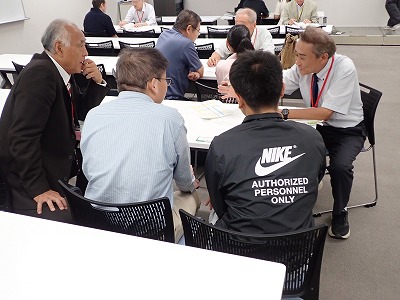
最後のプログラムになりますが、参加者それぞれが知りたいことを、相談できます。相談してくれる相談員は、都立高校で働き都立高校をよく知っている先生たちです。同じような質問を持つ皆さんの参考になると思います。相談内容の概要を紹介します。(特定される情報は省いてあります)
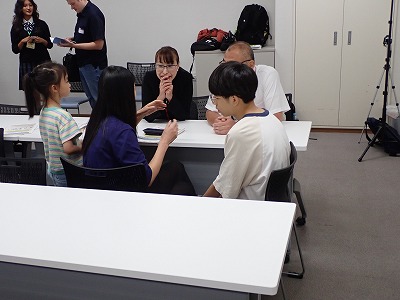
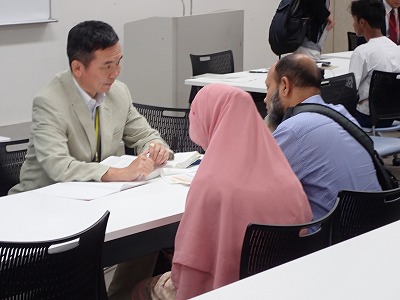
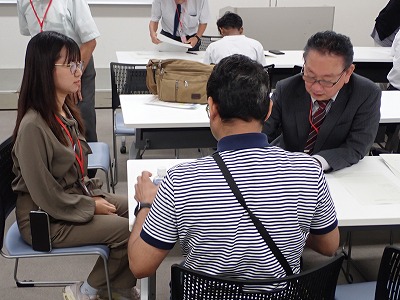
モンゴル 母と子
どこに受検するか悩んでいる。在京は、滞在期間が長く無理。一般入試で、現在は篠崎高校を考えている。できれば小岩高校がよいと考えている
調査書点がそれほど高くない。V模擬は受けたそうで結果もしっている
社会、国語、理科が難しい日本語はN3だという、話してみると応対はできる
私立高校を滑り止めに考えている。関東第一、今日聞いて杉並総合もよいと感じた
N3とN2の壁は高いので、日本語をもっと鍛えたほうがよいのでは。一般校ではなく、日本語サポートのある高校がよいのではないかと話したが、本人は、自分で日本語はなんとかなると考えている。日本語サポートでは、一橋、田柄を見に行ってみてはどうか?11月15日にもう一度来るようにいった。お母さんに長く日本にいるのかと聞いたら、わからないと答える。子どもに聞いたら、日本に長くいたいと反対の気持ちだった。それなら、日本語サポートのある高校に行って、日本語レベルを上げて、大学に行くことを考えたほうがよいと対応
Mongolia: Mother and Child
She’s struggling to decide where to take the entrance exams. Schools in Tokyo aren’t an option because her stay here is too short. For the general entrance exam, she’s currently considering Shinozaki High School. Ideally, she’d prefer Koiwa High School.
Her school transcript scores aren’t particularly high. She took the V Mock Exam and knows her results.
She finds social studies, Japanese language, and science difficult. She says her Japanese is at the N3 level, but when I spoke with her, she was able to hold a conversation.
She’s considering a private high school as a safety school. I heard about Kanto Daiichi today, and I also felt that Suginami Sogo would be a good option.
The gap between N3 and N2 is significant, so perhaps they should focus more on improving their Japanese. I suggested that a high school with Japanese language support might be better than a general high school, but the student believes they can manage the language on their own. Regarding Japanese language support, why not visit Hitotsubashi and Tagara to check them out? I told them to come back again on November 15. When I asked the mother how long they planned to stay in Japan, she replied that she didn’t know. When I asked the student, they expressed the opposite sentiment, saying they wanted to stay in Japan for a long time. In that case, I advised them that it would be better to attend a high school with Japanese language support, improve their Japanese proficiency, and then consider going to college.
台湾 母と子
面接ではどのように聞かれるのか面接への対応が質問
一橋高校1部を考えている、日本に2年間いて N3取得済み
面接の詳細などを説明した。
Taiwan: Mother and Child
Questions about what to expect during the interview and how to prepare for it
I am considering applying to Hitotsubashi High School, Division 1; I have been in Japan for two years and have already obtained the N3 certification.
I explained the details of the interview and other related matters.
中国 父と子
杉並総合に受検したい 1次不合格したら、次はどうなのか、3次迄受検できるのか
日本人が多い学校に進学したい。特別参加してくださった杉総の校長にも相談を聞いていただいた。
面接と作文の具体的な話し。聞かれる内容は?将来何をしたいか、自分の長所、中学で頑張ったこと
昨年7月に来日、まだ日本語は十分ではない。
China: Father and Son
I want to take the entrance exam for Suginami Sogo. If I fail the first round, what happens next? Can I take the exam up to the third round?
I want to attend a school with many Japanese students. I also consulted with the principal of Suginami Sogo, who kindly agreed to meet with us.
We discussed the specifics of the interview and essay. What kinds of questions will I be asked? What I want to do in the future, my strengths, and what I worked hard on in middle school.
I arrived in Japan last July, and my Japanese is still not very good.
インド 父と子 中1
まず1年から3年までインタナショナルスクールに行って高校から 日本の高校に行きたい
IB(インタナショナルバカロレア)高校に行きたい国際高校を紹介、日本橋高校も紹介(IBを開始した)
高校15歳までに3年3か月を過ぎるかすぎないか微妙、相談センターで確認するように指導
受検は何回あるのか? 私立の場合は学校によって異なります。
India: Father and Son, 7th Grade
First, I want to attend an international school from 1st through 3rd grade, and then transfer to a Japanese high school starting in high school.
I’d like to attend an IB (International Baccalaureate) high school. Please introduce some international high schools, including Nihonbashi High School (which has started offering the IB program).
It’s unclear whether I’ll have reached 3 years and 3 months by the time I’m 15 and entering high school; I’ve been advised to check with the counseling center.
How many entrance exams are there? For private schools, it varies by school.
中国 父と子
将来、科学技術を学びたく、大学進学を目標とした高校進学を考えている。
父親はわが子の進学に極めて熱心で。科学技術高校や小岩高校を志望校として具体的に挙げ、合格レベルや受験に向けた学習の仕方等を尋ねていた。「内申点」も知っていた。生徒は「授業の6割ぐらいは理解できている。数学、英語の成績は良い。しかし、国語、社会、理科は日本語が難しいので、思うような成績になっていない。」とのことであった。生徒には、学習や進学への意欲がみられた。
それらを踏まえた相談に応じながら以下をアドバイスした。
(1)まずは、在京外国人に有利な在京生のための入試を受けてはどうか。その受検の仕組みや科目などを親子と改めて確認し、具体的に竹台高と杉並総合高を説明した。
(2) 一般入試では志望している科学技術高について、偏差値一覧表をもとに合格レベル(2つの科に難易度が異なる)や受験勉強(特に、数、国、社)への取り組みを示した。
(3)国語や社会の基礎学力や読解力を高めるのに、日本語の習得が最も重要となる。受験勉強も兼ね、在京生のための入試の過去の作文問題に取り組み、中学の先生に添削してもらうとよい。また、先輩の体験談にあったように、日本語指導の教育機関や受験塾などをWebサイトで調べ、参加してみる。
China: Father and Son
The student hopes to study science and technology in the future and is considering attending high school with the goal of going on to college.
The father is extremely enthusiastic about his child’s education. He specifically mentioned Science and Technology High School and Koiwa High School as target schools and asked about the required academic standards for admission and how to prepare for the entrance exams. He was also aware of the student’s “internal evaluation scores.” The student said “I understand about 60 percent of the lessons. My grades in math and English are good. However, in Japanese, social studies, and science, the Japanese language is difficult, so my grades aren’t as high as I’d like.” The student showed a strong motivation for learning and advancing to higher education.
Based on this information, I provided the following advice during our consultation:
(1) First, why not take the entrance exam designed for students living in Tokyo, which is advantageous for foreign students residing in the capital? I reviewed the exam structure and subjects with the student and their parents, and provided specific explanations about Takadai High School and Suginami Comprehensive High School.
(2) Regarding the general entrance exam for the Science and Technology High School the student is aiming for, I used a standard deviation score chart to outline the required level for admission (as the difficulty varies between the two departments) and suggested a study plan for the exam (particularly for math, Japanese, and social studies).
(3) Mastering the Japanese language is crucial for improving basic academic skills and reading comprehension in Japanese and social studies. As part of exam preparation, it would be beneficial to work on past essay questions from the entrance exams for students living in Tokyo and have a middle school teacher review them. Additionally, as mentioned in the testimonials from older students, look up Japanese language instruction institutions and exam prep schools online and consider participating in their programs.
ネパール ヒンディー語での質問 父母
通訳をネパールの先輩に手伝ってもらいました。
1 在京の受検資格について、微妙なので確認するように話した。
「一度来日し、そのあと一時帰国し、再び日本に戻ったが、この場合に在京資格はあるか。」とのことだったので、在京説明会10月11日と相談センターを紹介した。
2 日本語教室を毎日中学で受けられないか?
中学ではそれはできない。
葛飾区のNPO等の主催する教室を紹介(各団体とも週1を確認)
3 中学に行かないで受験勉強をして高校に行けるか。
中学卒業が都立高校受検の前提と回答
相談センターに電話して予約を取り、相談するとよい。
Nepal: Questions in Hindi—Parents
I asked a senior colleague from Nepal to help with the interpretation.
1. I explained that the eligibility requirements for taking the exam while residing in Tokyo are somewhat ambiguous, so I advised them to confirm this.
They asked, “I came to Japan once, then returned home temporarily, and came back to Japan again—do I still qualify to take the exam while residing in Tokyo?” So I referred them to the information session on October 11 and the consultation center.
2. Is it possible to take Japanese language classes every day at a junior high school?
That is not possible at a junior high school.
I referred them to classes organized by NPOs and other organizations in Katsushika Ward (confirmed that each group meets once a week).
3. Is it possible to go to high school by studying for the entrance exams without attending junior high school?
I replied that graduating from junior high school is a prerequisite for taking the Tokyo Metropolitan High School entrance exam.
It would be best to call the Consultation Center to make an appointment and discuss this further.
インド 父母
淺草高校受験希望 点数配点を知りたい 英語で面接作文を受ける予定
内容が大事、いい表現 を使えば有利になる 昼夜間三部制の説明を詳しくした
India—Parents
Wants to apply to Asakusa High School; wants to know the scoring criteria; plans to take an interview and essay in English.
Content is important; using good expressions will give you an advantage. We provided a detailed explanation of the school’s three-shift system (day, evening, and night).
中国 父
高校のレベルは違うのか?文系理系につて
在京の学校レベルは 英検は高校受検で必要か? 有利になるか?
在京で受けるか、一般で受けるか考える必要がある。中学の勉強をしっかり、日本語は難しいが頑張るようにはなした。
China—Father
Are there differences in high school levels? Regarding liberal arts and science tracks
What is the academic level of schools in Tokyo? Is the Eiken test required for high school entrance exams? Will it give an advantage?
We need to decide whether to apply through the Tokyo-based track or the general track. I told my child to study hard in middle school and to do their best with Japanese, even though it’s difficult.
アメリカ 父
生徒のレベルにあった学校について、英語力を伸ばせる学校について相談があった
9年日本にいる。在京入試は受けることができない
また、ふりがな(ルビ)の問題は使えない。 都教委に年数について聞くことを勧めた
日本語・漢字が苦手で、社会・理科の学力検査が少し難しい 私立を含めて英語を中心とした学校を探している。
本人の成績との関係では、田柄高校、大泉桜高校あたりが通学しやすい 説明会などに行くことを勧めた
私立高校との併願について、説明した
United States—Father
I received a consultation regarding schools suited to the student’s level and schools where they can improve their English skills.
The student has been in Japan for nine years and is not eligible to take the Tokyo Metropolitan entrance exams.
Additionally, they cannot use furigana (ruby characters). I advised them to inquire with the Tokyo Metropolitan Board of Education regarding the required number of years of residence.
The student struggles with Japanese and kanji, and finds the academic proficiency tests in social studies and science somewhat difficult. They are looking for schools—including private ones—that focus on English.
In terms of the student’s academic performance, Tagara High School and Oizumi Sakura High School would be convenient for commuting; I recommended attending information sessions at these schools.
I also explained the process for applying to both public and private high schools simultaneously.
モンゴル 姉と本人
日本に来て1年、N5あたりの日本語能力である
竹台高校の在京外国人入試を目指している
入試日程の確認 10月の在京外国人入試の相談会の内容と様子を説明した
事前資格確認について、予約を取って受けることを説明した
ルビ付き、辞書持ち込みの書類作成方法について、説明した
Mongolia: Sister and Student
Has been in Japan for one year; Japanese proficiency is around the N5 level.
Aiming to take the Takadai High School entrance exam for international students in Tokyo.
Confirmed the exam schedule; explained the content and details of the October consultation session for the Tokyo entrance exam for international students.
Explained that an appointment must be made to undergo the preliminary eligibility check.
Explained how to prepare documents with furigana and permission to bring a dictionary.
中国 母
田柄に1次で受けて不合格の場合どうすればよいか
丸の内線 本郷三丁目に住所がある。
在京の作文は書けるのか? 練習したらできる。面接は日本語で受ける場合
通いやすい住所で、飛鳥はどうなのか、見学に行き考えたほうがよいと話す
China: Mother
What should she do if she takes the first-round exam at Tagara and fails?
She has an address in Hongo-sanchome on the Marunouchi Line.
Can she write the essay for the Tokyo-based exam? With practice, she can. If she takes the interview in Japanese,
she should consider an address that’s easy to commute from; I suggested she visit Asuka High School to see for herself.
次回11月15日にも個別相談があります。在京の方は、いま志望校を決めているときだと思います。わからないことが出てきたら、相談においでください。1回目のガイダンスに来た方も、わからないことがあれば、2回目にも参加してください。今度の会場は、大学でやりますので、広い場所が取れます。まずは、早めに予約してください。
There will be another individual consultation session on November 15. If you live in Tokyo, you’re probably in the process of deciding which schools to apply to right now. If you have any questions, please come and talk to us. Even if you attended the first orientation session, please feel free to join the second one if you still have questions. This time, the session will be held on a university campus, so we’ll have plenty of space. Please be sure to make your reservation as soon as possible.
第1回 進学ガイダンスアンケートまとめ
第1回ガイダンスの参加者アンケートをまとめました。このアンケートで、どんな子どもたちが都立高校を受検しようとしているか理解できます。
We have compiled the results of the survey administered to participants at the first orientation session. This survey provides insight into the types of students who are planning to take the entrance exams for Tokyo Metropolitan high schools.
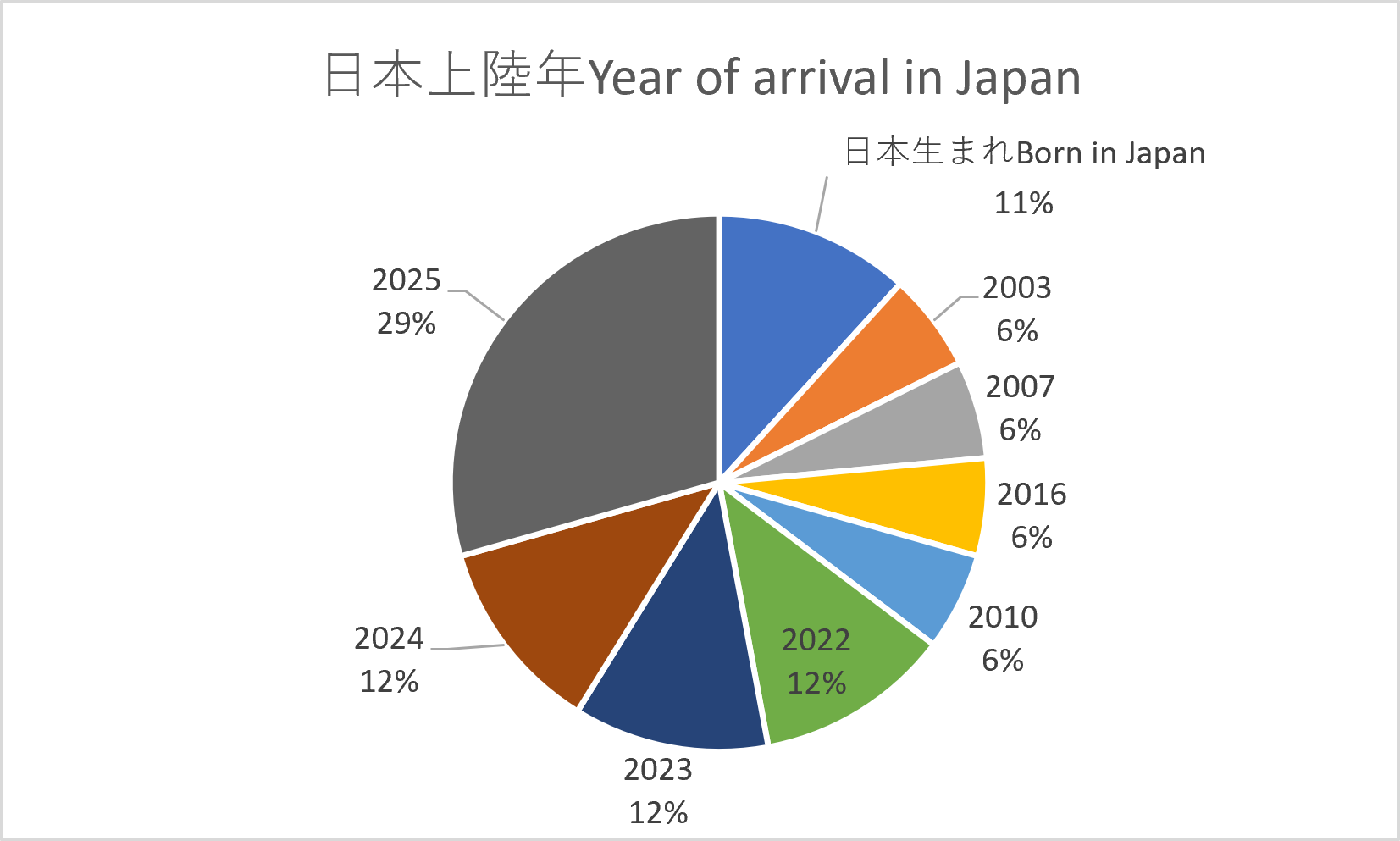
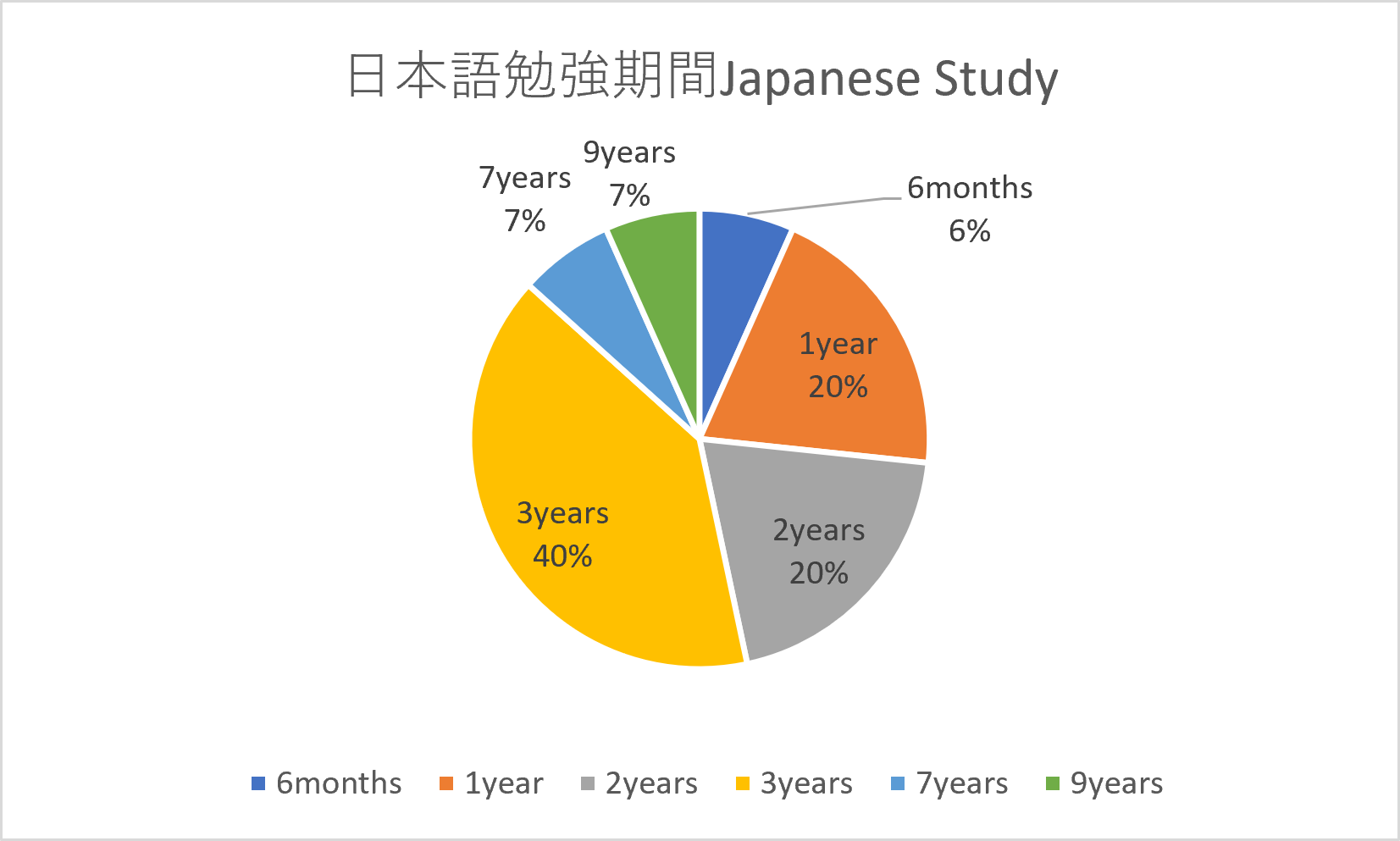
日本に来たのは、2025年が一番多いですが、在京特別枠は3年という、決まりがあり、2024年、2023年、2022年までの子供たちが多くきています。3年だと、まだ日本語が理解できないということから、在京受検があるからです。もちろん日本で生まれた子もいます。この子たちは、日本人と同じ一般受検を受けます。在京特別受検を受けたいという傾向から、日本語学習歴は、当然3年までが多くなっています。中学校も、全く日本語がわからない子どもたちに、「プレスクール」や「日本語初期指導」を行うなど、増加する外国人在京者たちに必死に対応しています。
While 2025 sees the highest number of children arriving in Japan, there is a rule that the Tokyo Special Admission Quota is limited to three years, so many children who arrived in 2024, 2023, and 2022 are applying. Since a three-year period is often too short for children to fully understand Japanese, the Tokyo Special Admission Exam is available. Of course, there are also children born in Japan. These children take the general entrance exams alongside Japanese students. Given the trend toward applying for the Tokyo Special Admission Exam, it is natural that most children have up to three years of Japanese language study under their belts. Junior high schools are also working hard to accommodate the growing number of foreign residents in Tokyo by offering “preschool” programs and “early Japanese language instruction” to children who have no knowledge of Japanese at all.
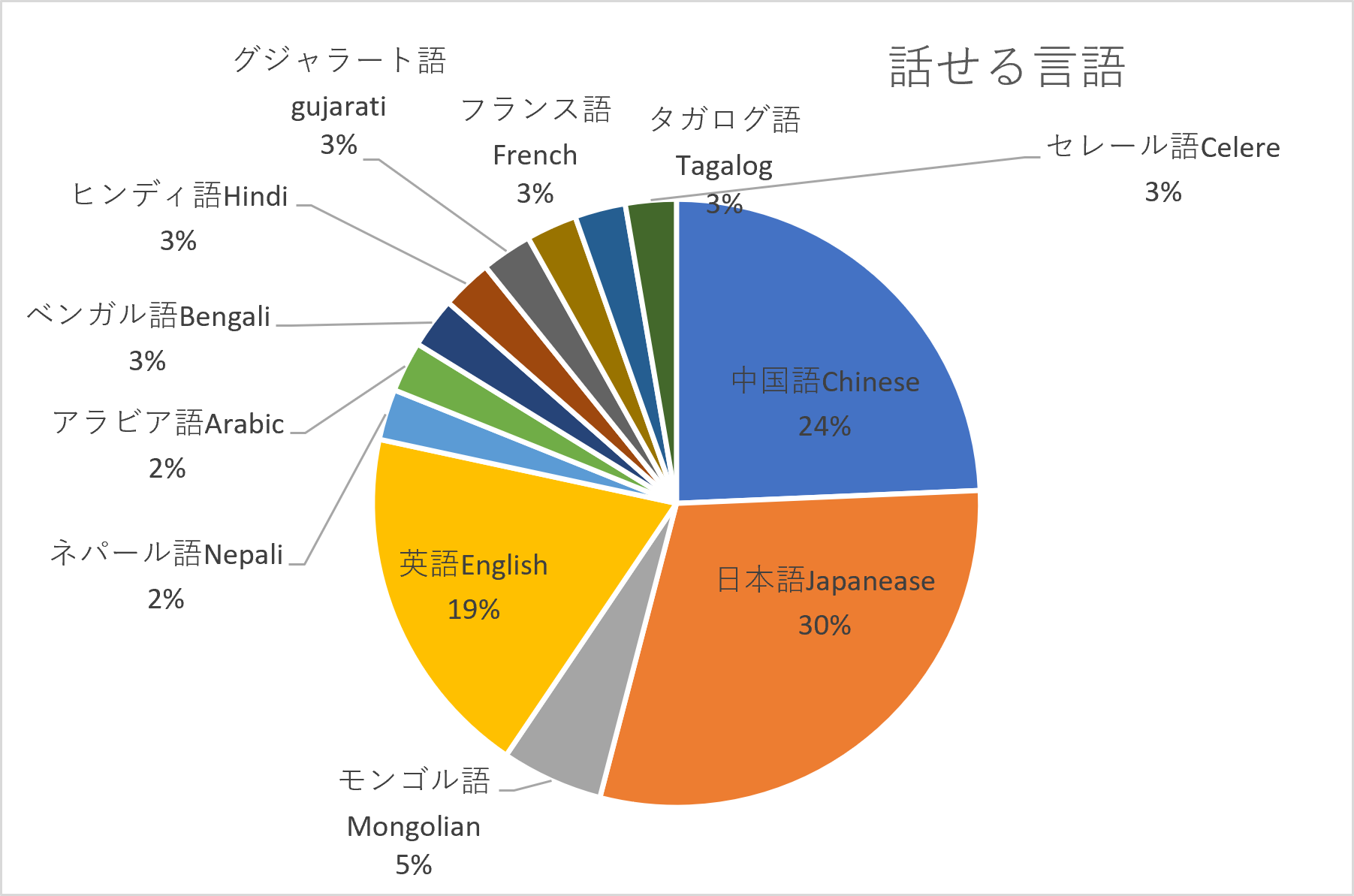
しかし、話せる言語を見てください。実に多様な言語をはなしていることが理解できます。中には、一人で複数の言語を話せる子もいます。つまり、母語であれば、不自由はないのです。学習も母語で学んできたわけです。
その子たちは自分が望むわけではなく、親の就労の理由で、突然日本で生活、学習せざるをえなくなったことを理解する必要が在ります。日本語は世界でも、難しい言語といわれます。
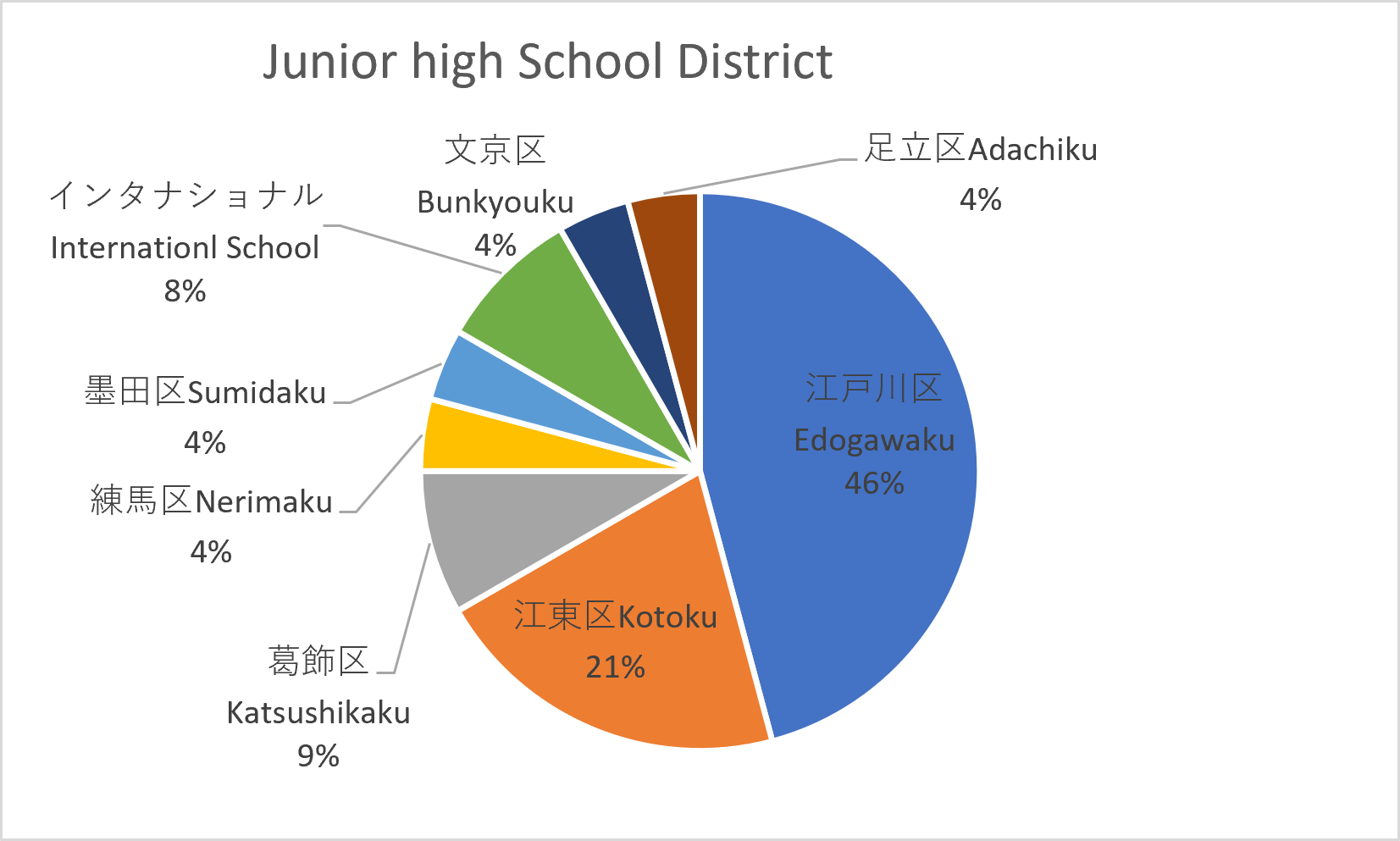
私たちの、この支援事業は、在京外国人が特に多い東京の東部地区をメインターゲットとしています。開催場所も江戸川区で実施しましたので、そのため、特に江戸川区をはじめとする、東部地区の子どもたちが多く参加しました。
However, take a look at the languages they speak. You’ll see that they speak a truly diverse range of languages. Some children can even speak multiple languages on their own. In other words, they have no difficulty when it comes to their native languages. After all, they have been learning in their native languages all along.
It’s important to understand that these children did not choose this situation; they were suddenly forced to live and study in Japan because of their parents’ employment. Japanese is considered one of the most difficult languages in the world.
Our support program primarily targets the eastern districts of Tokyo, where there is a particularly high concentration of foreign residents. Since the event was held in Edogawa Ward, many children from the eastern districts—especially those from Edogawa Ward—participated.
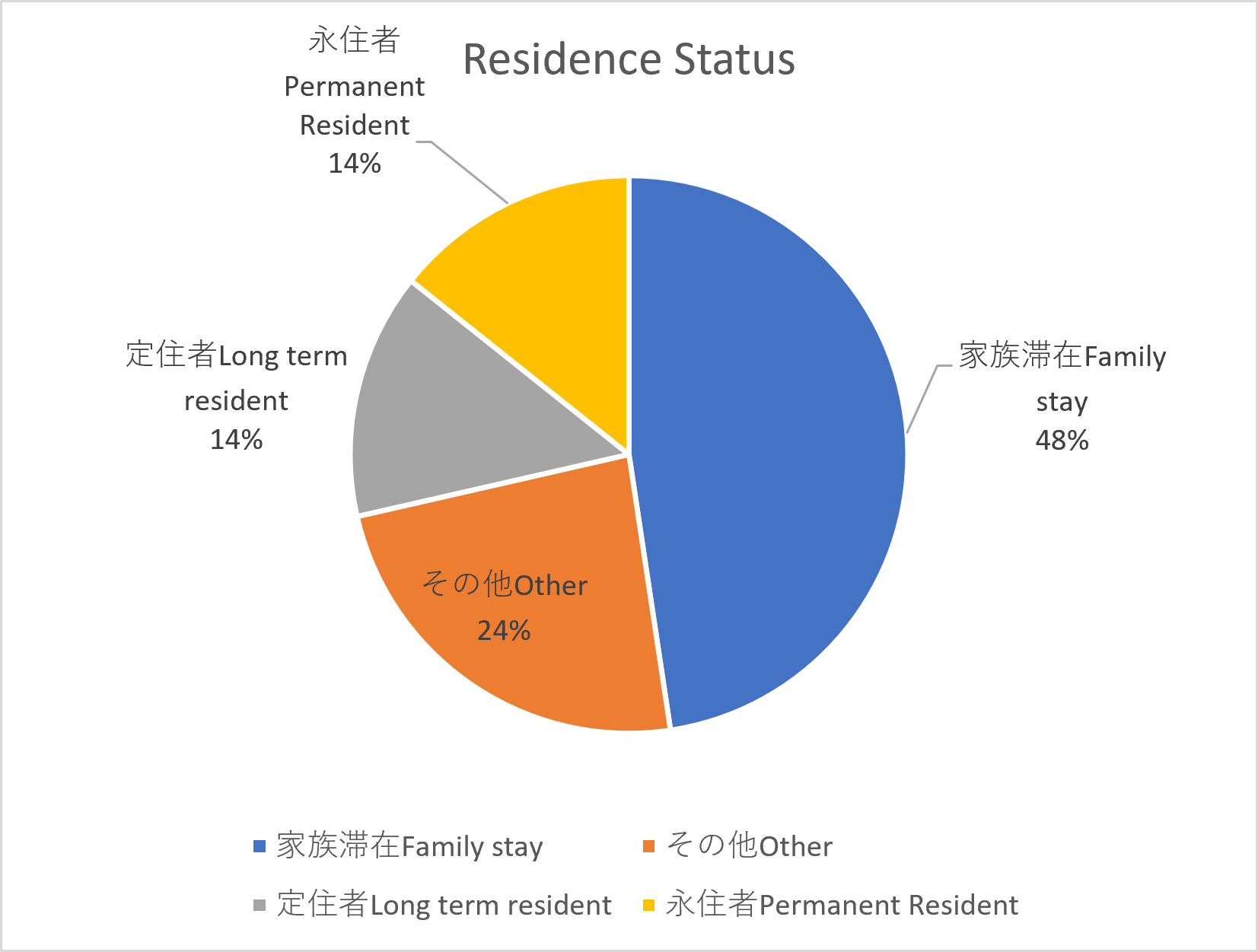
日本に滞在している在留許可の種類は、多くは家族滞在です。将来長く日本に住むためには、就労できる自分の在留許可を得る必要が在ります。そのためにも、都立高校卒業は必要な基本的な資格となってきます。
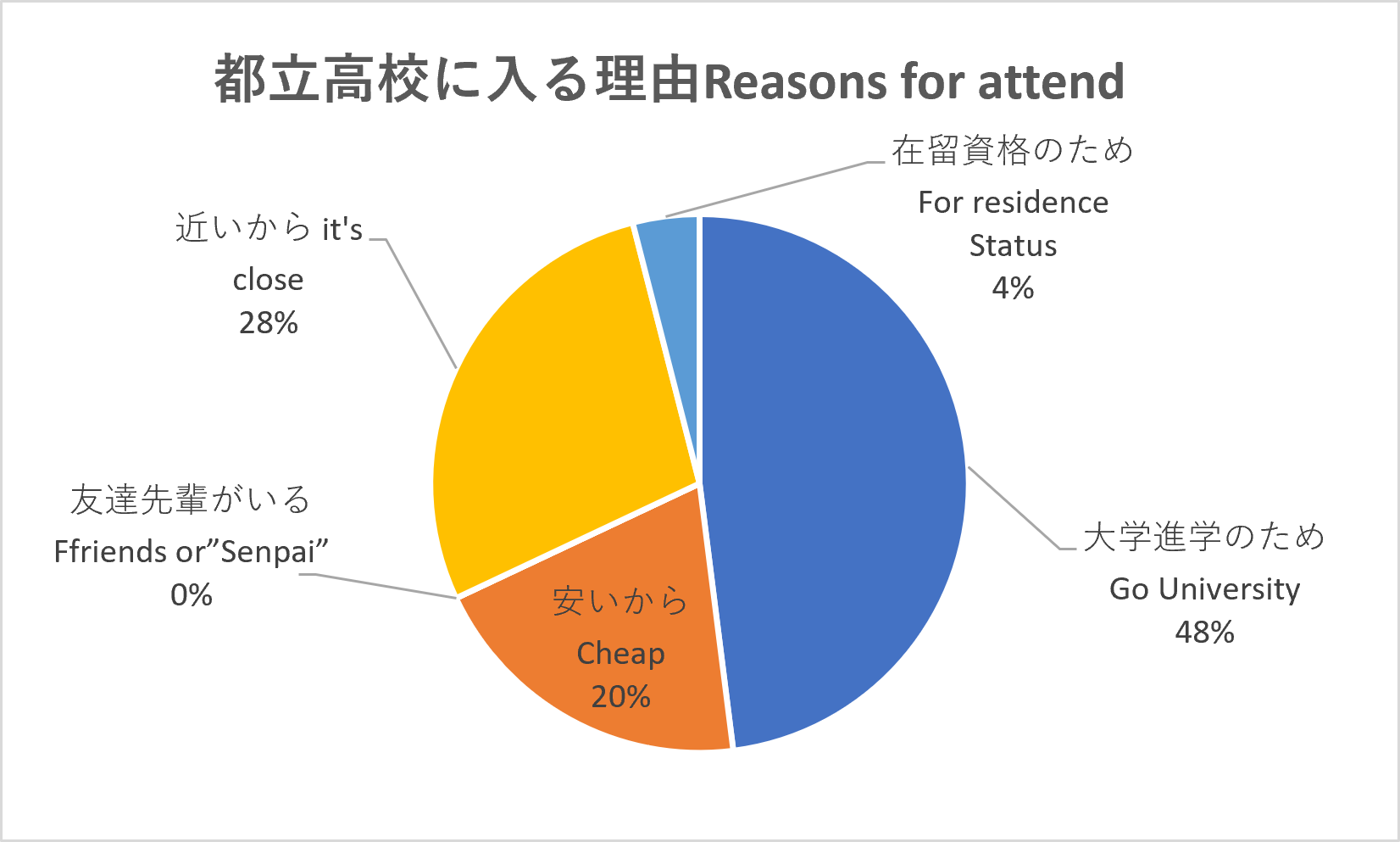
都立高校に入る理由を聞いてみると、一番多いのは、大学進学でした。高校を卒業して、大学に進学するのが、日本で就労するには必要でしょう
Most of the residence permits held by people staying in Japan are for family residence. To live in Japan long-term in the future, you’ll need to obtain your own residence permit that allows you to work. For that reason, graduating from a Tokyo Metropolitan high school is a necessary basic qualification.
When asked why they chose to attend a Tokyo Metropolitan high school, the most common answer was to go on to college. Graduating from high school and going on to college is likely necessary for finding employment in Japan.
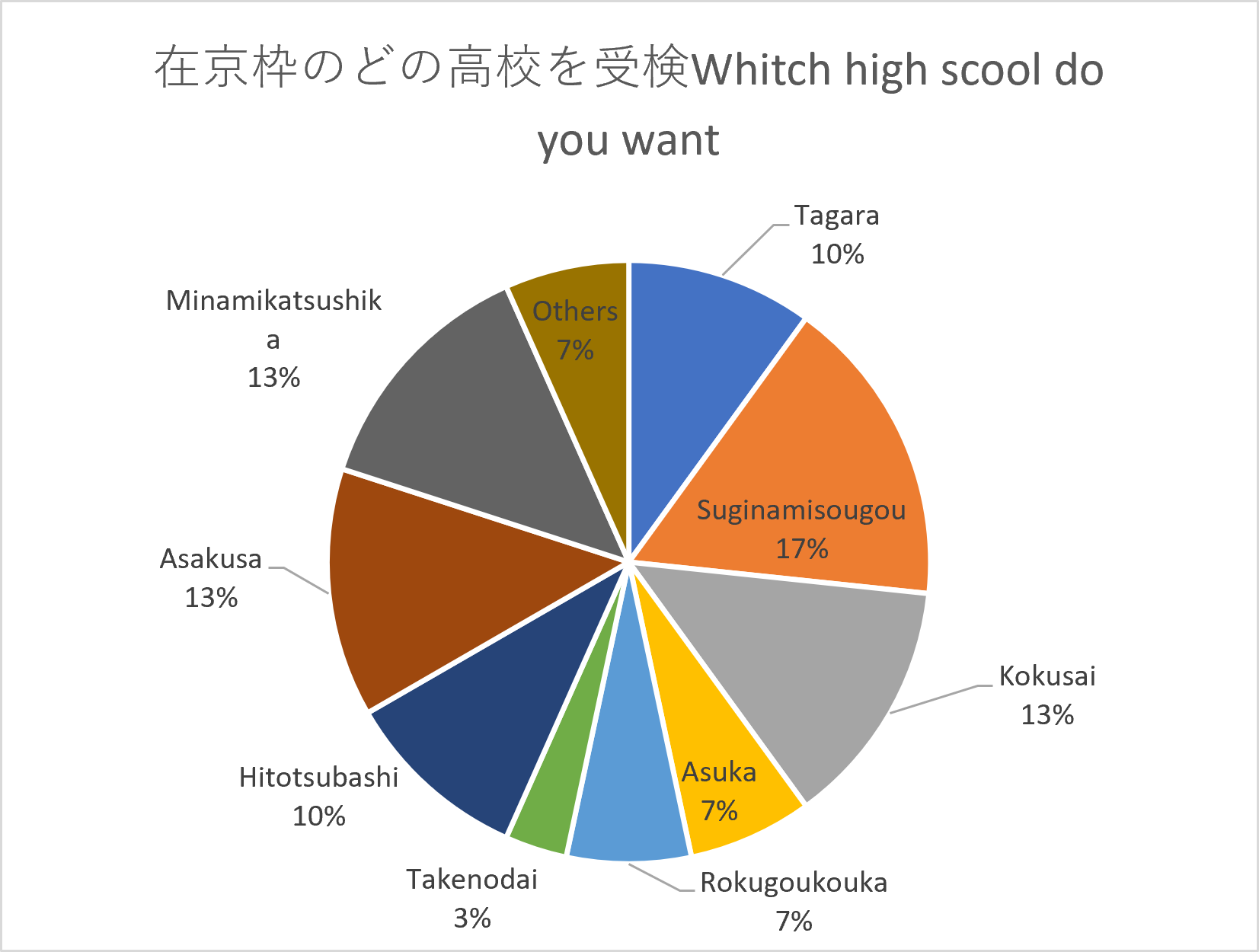
在京特別枠での受検ができる子どもに、どこの高校に行きたいかきいてみました。今回は、12校の中で唯一、総合科である杉並総合高校が一番人気でした。そして、国際高校です。国際高校はIBというインタナショナルバカロレアのコースがあり。英語で授業を受ける子ともできて、英語が得意な子にとっては人気が高い学校です。その他では、地元の南葛飾高校と昼夜間定時制の一橋高校と浅草高校が人気になりました。
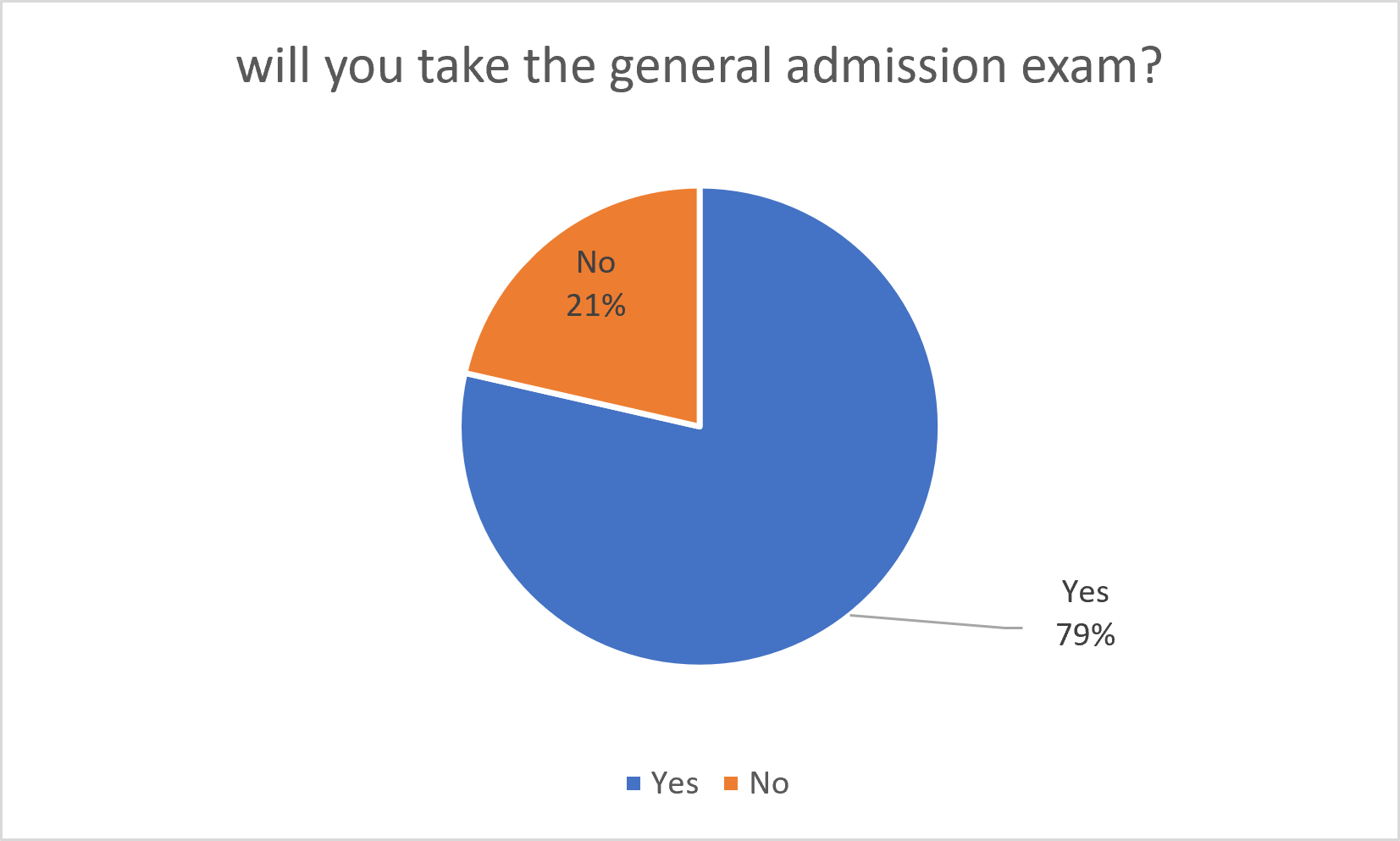
もし、在京受検で不合格になったら、一般入試を受検するかとの問いには、ほとんどの子こどもたちが受検すると答えました。昨年の例でも、在京特別枠受検では、ほぼ同数が不合格となっており、当然一般入試で、日本の子どもたちと同じ受検にチャレンジするということです。
We asked children eligible to take the exam under the Tokyo Special Admission Quota which high schools they wanted to attend. This time, Suginami Comprehensive High School—the only comprehensive high school among the 12 schools—was the most popular choice. Next was International High School. International High School offers the International Baccalaureate (IB) program, allowing students to take classes in English; it is a highly popular school among students who excel in English. Other popular choices included the local Minami-Katsushika High School, as well as Hitotsubashi High School and Asakusa High School, both of which offer day and evening/night programs.
When asked if they would take the general entrance exam if they failed the Tokyo Special Quota exam, almost all of the children said they would. Looking at last year’s results, nearly the same number of students failed the Tokyo Special Quota exam, so it stands to reason that they would then take the general entrance exam and compete on the same footing as Japanese students.
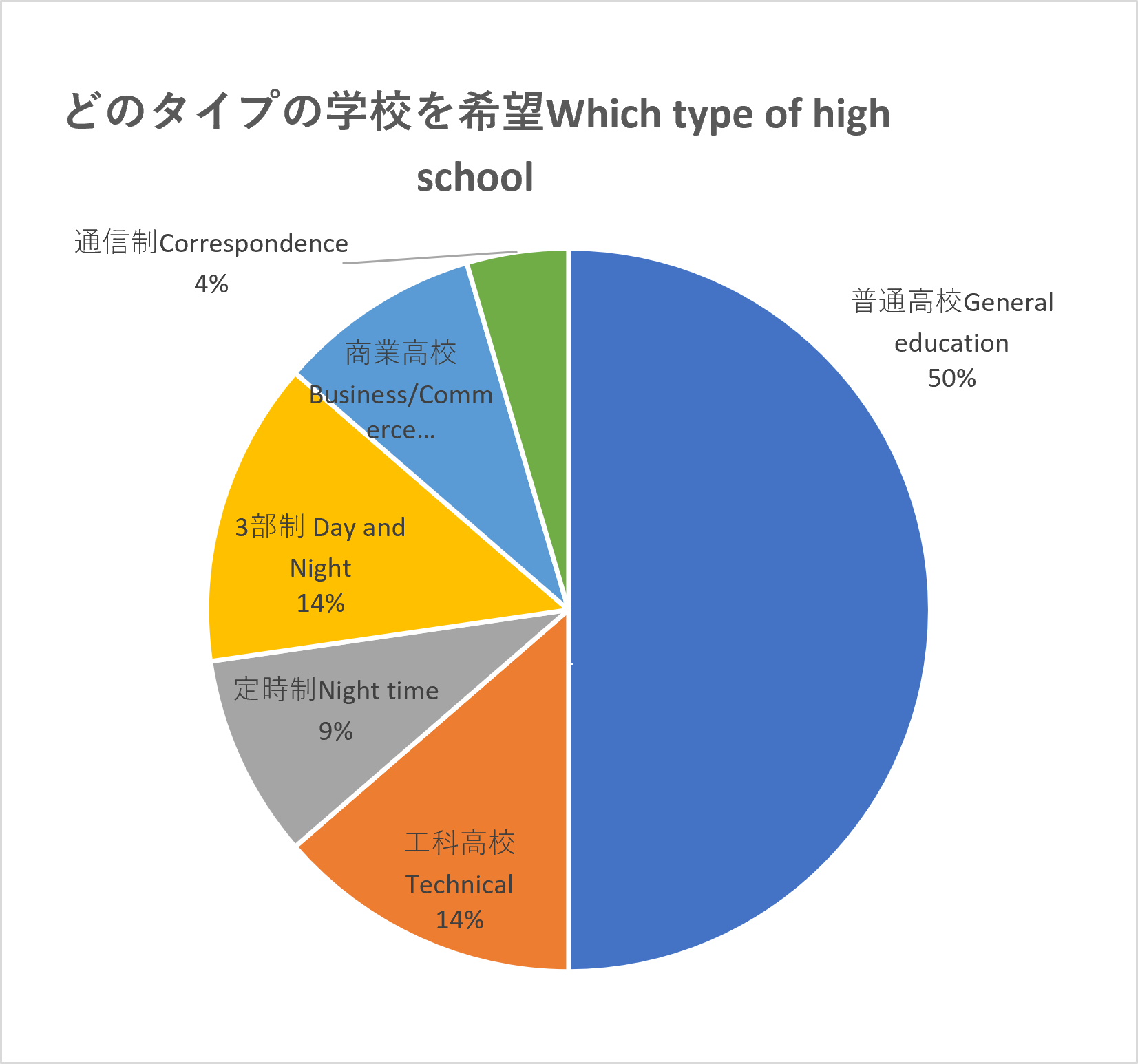
多様な都立高校の種類の中で、どのタイプの学校を受検するか聞きました。半数は普通科を希望するということですが、半分は、分れました。ガイダンスでは、多様なタイプを説明しましたので、工科高校、定時制、3部制定時制、商業高校と、通信制高校など、自分の生活にあった選択肢を選んでいます。高校選択で最も大事なのは、自分の生活時間や学習目的や学校の規則など多様な観点から考えて、家族で話し決めてほしいと思います。
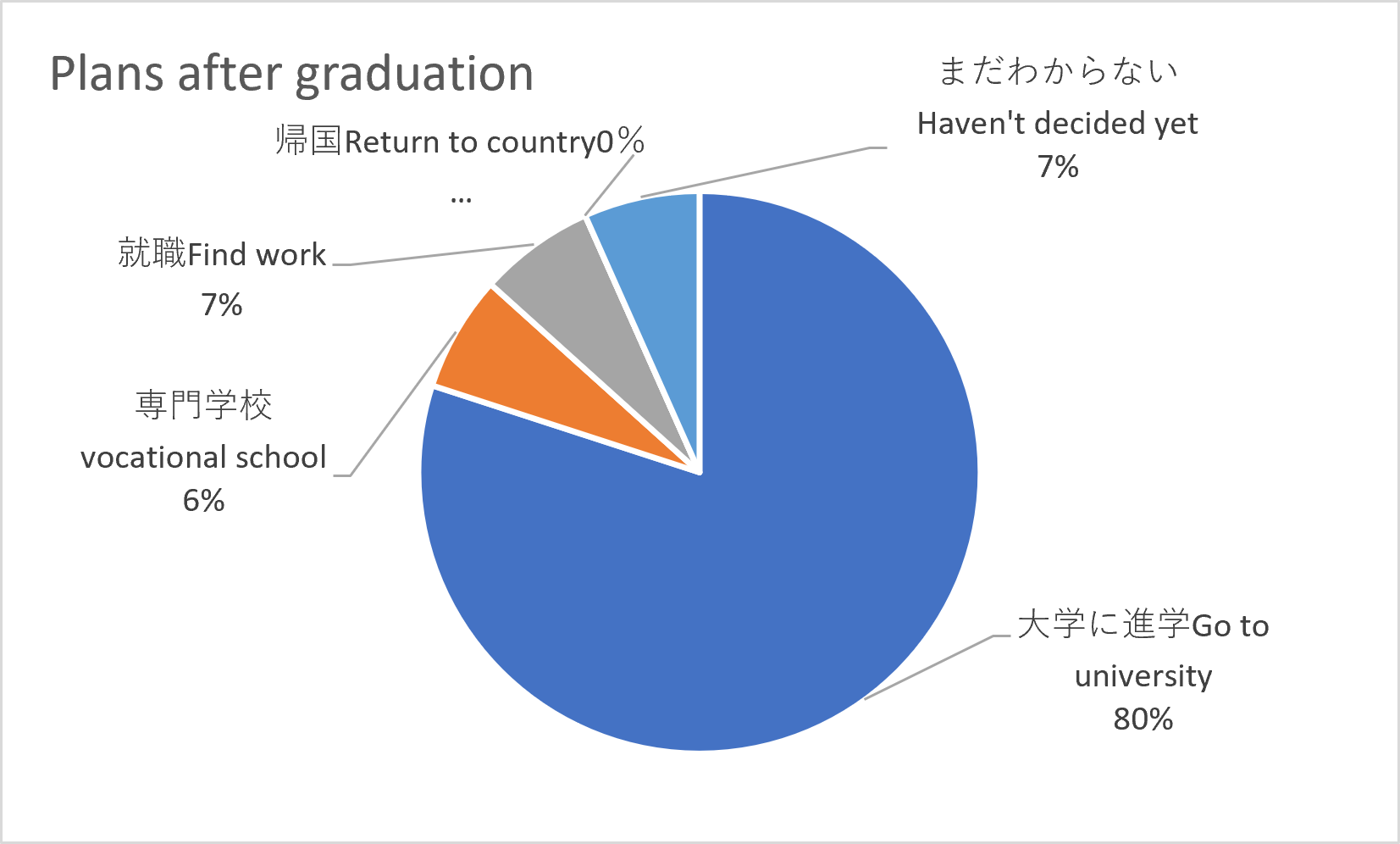
将来の希望を聞いてみました。8割が大学進学を考えていることがわかりました。特に、帰国するという答えはゼロでした。ぜひ大学に入り、学習を続け、日本語をマスターして、日本の文化も理解して日本を好きになってくれることおを望みます。日本人にしても、日本語や学習を頑張ってくれるこの子たちの努力を友達として体験して、多文化共生の心を拡げてほしいと思います。
We asked the students which type of school they plan to apply to among the diverse range of Tokyo Metropolitan high schools. While half said they hope to attend a general studies program, the other half had different preferences. Since we explained the various types of schools during the orientation—including technical high schools, part-time high schools, three-shift part-time high schools, commercial high schools, and correspondence high schools—students are choosing the option that best fits their lifestyles. When selecting a high school, I hope families will discuss and decide together, considering various factors such as their daily schedules, academic goals, and school rules.
I asked them about their future aspirations. I found that 80 percent are planning to go on to college. Notably, not a single student said they planned to return to their home country. I sincerely hope they will enter college, continue their studies, master the Japanese language, gain an understanding of Japanese culture, and come to love Japan. I also hope that their Japanese classmates will experience firsthand, as friends, the efforts these students are making to learn Japanese and study hard, and that this will help them cultivate a spirit of multicultural coexistence.
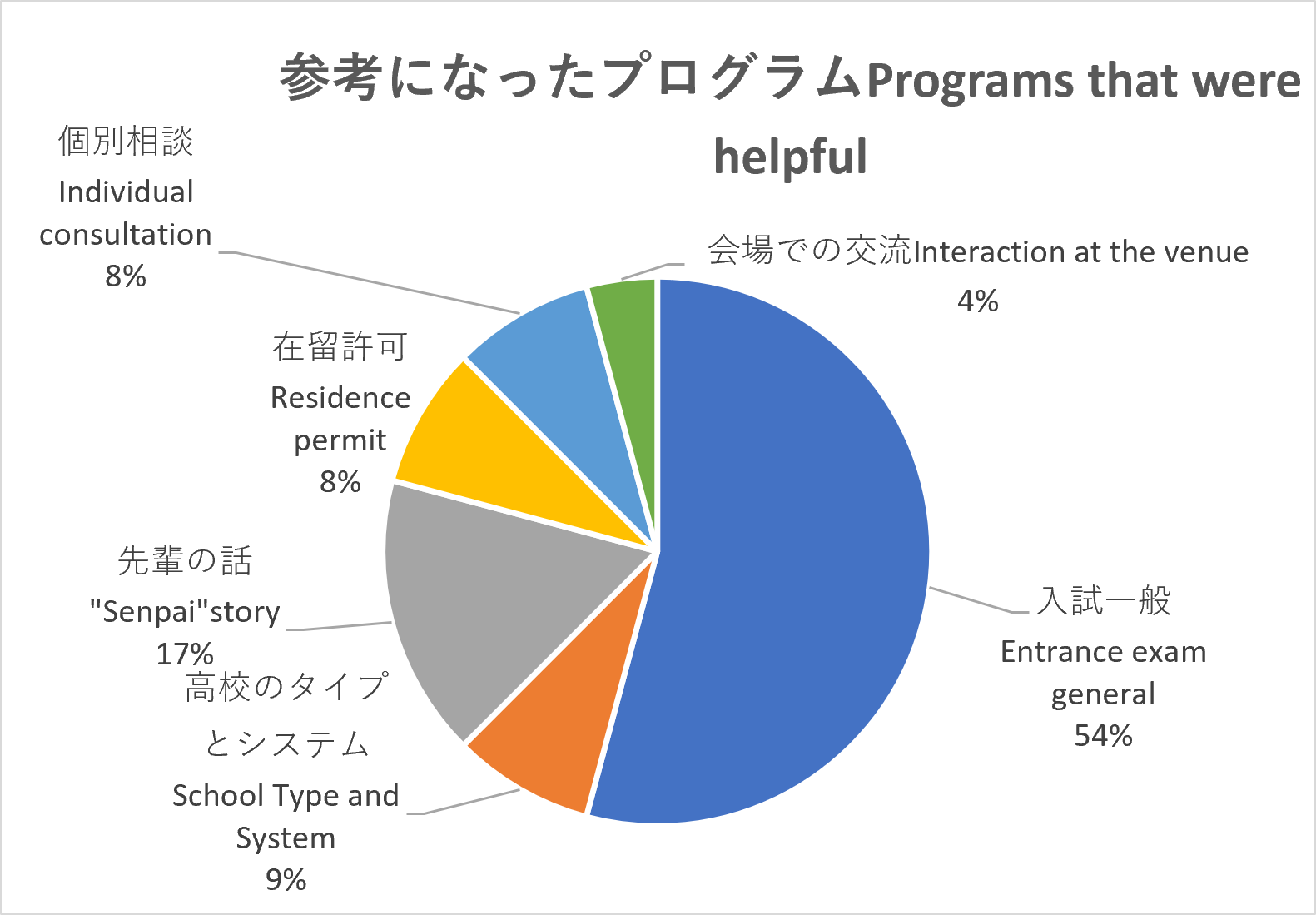
参考になったプログラムを聞きました。「入試一般」についてが一番でした。やはり、都立の入試のことは外国の人たちにはわからないということなのでしょう。ガイダンスの必要性をさらに感じます。2番目が、先輩の話しです。これは、内容すべて、報告に載せましたが、素晴らしいインタビューでした。私たちですら、拍手を送りたくなるような、立派な答えでした。会場の子どもたちも、もっと頑張らなくてはと、元気づけられたのではないでしょうか。
I was told which programs were most helpful. The one on “General Entrance Exams” was the most popular. I suppose this just goes to show that foreign students really don’t understand how the Tokyo Metropolitan high school entrance exams work. It makes me feel even more strongly that guidance sessions are necessary. The second most popular was the talk by the upperclassman. I included the entire content in the report, but it was a wonderful interview. The answers were so impressive that even we felt like applauding. I’m sure the children in the audience were also inspired to try even harder.
2回目のガイダンスは11月15日です。予約はこのリンクのページから
ガイダンス開催までに公私にわたり運営に協力してくれた組織、団体にお礼申し上げます。
We would like to express our gratitude to the organizations and groups that assisted with the planning and operation of this event, both professionally and personally, leading up to the Guidance.
今回の開催にあたり、東京都教育員会からの後援、江戸川区教育員会からの後援、葛飾区教育員会からの後援、足立区教育委員会からの後援をいただきました。
その他、墨田区教育員会、江東区教育委員会には所属の中学校に案内を送らせていただきました。その他、教育庁都立学校教育部高等学校教育課入学選抜担当、東京都生活文化局、江戸川区ともに生きるまち推進課、江戸川区多文化共生センター、江東区国際交流協会の皆様にはご協力をいただきました。
その他、学校情報を集めるため、多くの都立高校、区立中学に学校訪問しました。情報提供ありがとうございました。
今回の事業実施にかんしては以下の東京都生活文化局からの助成を受けています。
「令和8年度 東京都在住外国人支援事業助成」対象事業
Supported by The Tokyo Metropolitan Government in fiscal year 2026